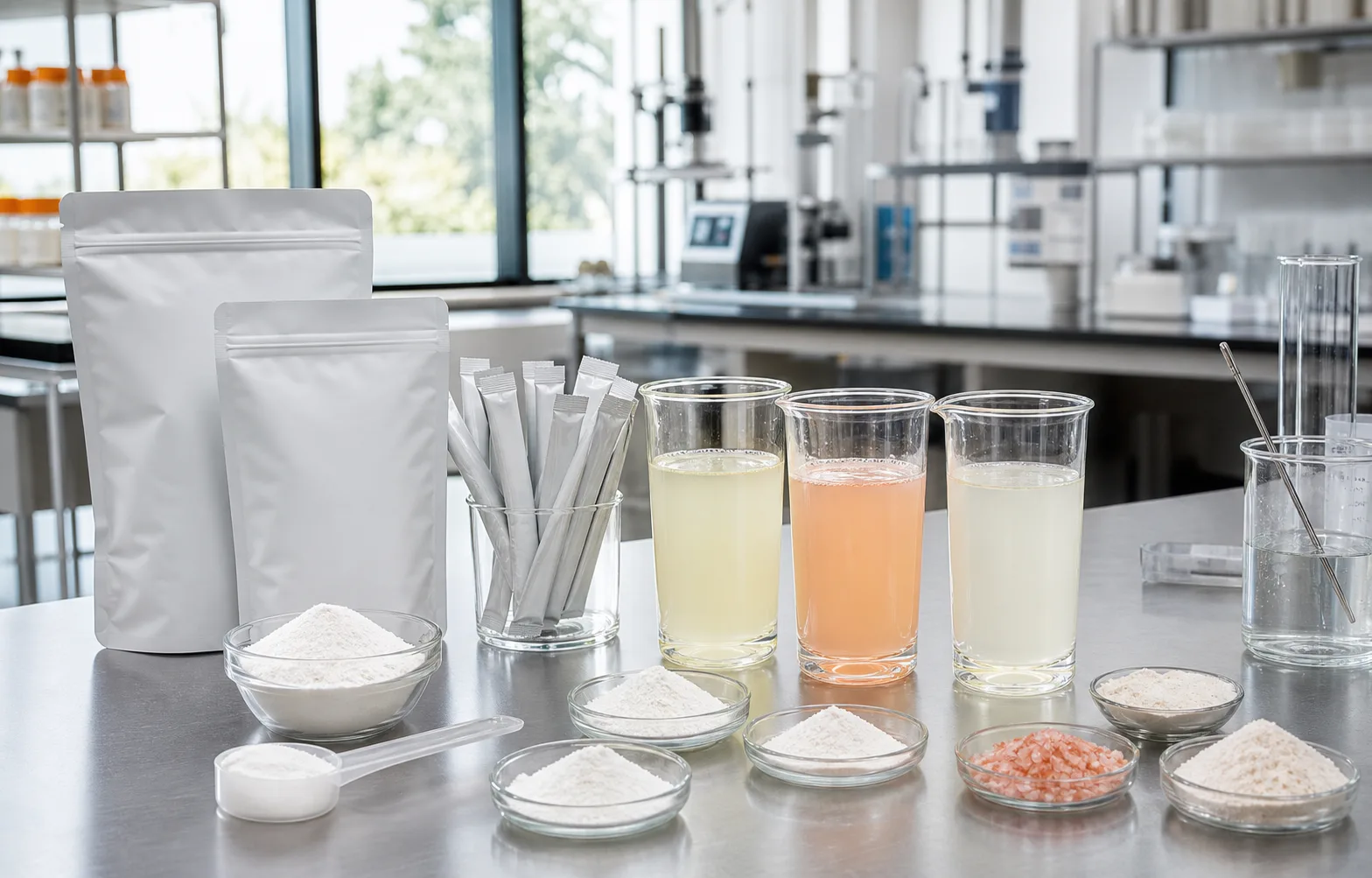
Electrolyte powders look easy on a concept deck. Add sodium, potassium, magnesium, a bright fruit flavor, a clean sweetener system, and a stick-pack format. The promise is simple: convenient functional hydration for modern routines.
Then the first sample tastes salty and metallic. The magnesium leaves a mineral edge. The citric acid is too sharp. The powder picks up moisture. The serving size barely fits the stick pack. The blend flows beautifully on the bench and then bridges on the filler. Suddenly, "hydration powder" is not simple at all.
That is the real work of electrolyte powder formulation. The product has to taste good in water, deliver the mineral profile the brand wants, survive manufacturing, stay stable in packaging, and use claims that do not create regulatory trouble.
Functional hydration is growing because the use case is obvious
Hydration has moved beyond the old sports-drink lane. Current 2026 trend coverage points to functional beverages, electrolyte mixes, and everyday hydration routines as areas where consumers want more than plain water but do not always want sugar-heavy drinks or bulky RTD formats. NielsenIQ's Expo West 2026 analysis also describes a broader pattern: consumers expect layered benefits in familiar daily-use products.
For supplement brands, that creates a practical opening. A powder or stick pack can support travel, workplace routines, fitness, warm-weather use, wellness bundles, and subscription packs. It is lightweight, shippable, and easier to customize than a ready-to-drink beverage.
The hard part is that hydration products are judged quickly. Consumers mix them in a bottle, taste them in water, and decide within seconds whether they would use the product again. In this category, repeat use is the product.

The mineral system drives taste before marketing does
Electrolytes are not neutral ingredients. Sodium can taste salty. Potassium can taste bitter or metallic. Magnesium salts can add chalky, mineral, or astringent notes. Calcium can change mouthfeel and solubility. Trace minerals can introduce flavor challenges at surprisingly low levels.
That means a hydration powder cannot be built only around label targets. The mineral form, dose, acid system, sweetener system, flavor direction, color system, and serving size all affect the final consumer experience.
| Formulation decision | What can go wrong | What to test early |
|---|---|---|
| Mineral forms | Metallic, salty, bitter, chalky, or lingering aftertaste | Side-by-side taste, solubility, and pH behavior in the finished flavor base |
| Acid balance | Too sharp, too flat, or unstable flavor release after mixing | Citric, malic, tartaric, and blended acid systems across target water volume |
| Sweetener system | Off-note exposure, delayed sweetness, or lingering sweetness fatigue | Natural and high-intensity sweetener blends against the actual mineral load |
| Serving size | Stick pack too large, poor dissolution, or expensive freight and packaging | Gram weight, density, scoop logic, and target packaging format together |
Flavor masking needs to happen inside the real formula
It is tempting to pick a trendy flavor first: yuzu, watermelon lime, blue raspberry, mango chili, coconut, or cucumber mint. The better sequence is less glamorous and more effective: build the mineral base, understand its taste load, then develop the flavor system around the real formula.
Electrolyte powders often need flavor masking for saltiness, bitterness, mineral edge, and sweetener aftertaste. The right answer may involve acid balance, aroma direction, sweetness timing, mouthfeel adjustment, and sometimes accepting that a flavor concept is wrong for the mineral profile.
Albert Max's formulation team treats flavor as part of the engineering work, not a final perfume spray. Our Flavor Masking Tech can help brands pressure-test mineral systems, sweeteners, acids, and botanical or vitamin add-ons before the product reaches a commercial batch.
Powder behavior can break a good concept
Many hydration formulas contain hygroscopic ingredients that like to pull moisture from the air. Acids, minerals, flavors, colors, and certain sweeteners can all affect clumping, caking, and flow. A powder that looks clean in a sample jar may behave differently after humidity exposure, during blending, or on a stick-pack line.
For manufacturing, the key risks are practical:
- powder bridging or inconsistent flow during filling
- segregation between dense minerals and lighter flavor or sweetener components
- fill-weight variation caused by density changes
- clumping after humidity exposure or poor packaging selection
- serving-size mismatch between formula target and stick-pack capacity
This is where contract manufacturing experience matters. Albert Max can evaluate powder flow, blending sequence, bulk density, particle size, packaging fit, and production controls before a hydration concept becomes a messy line trial.
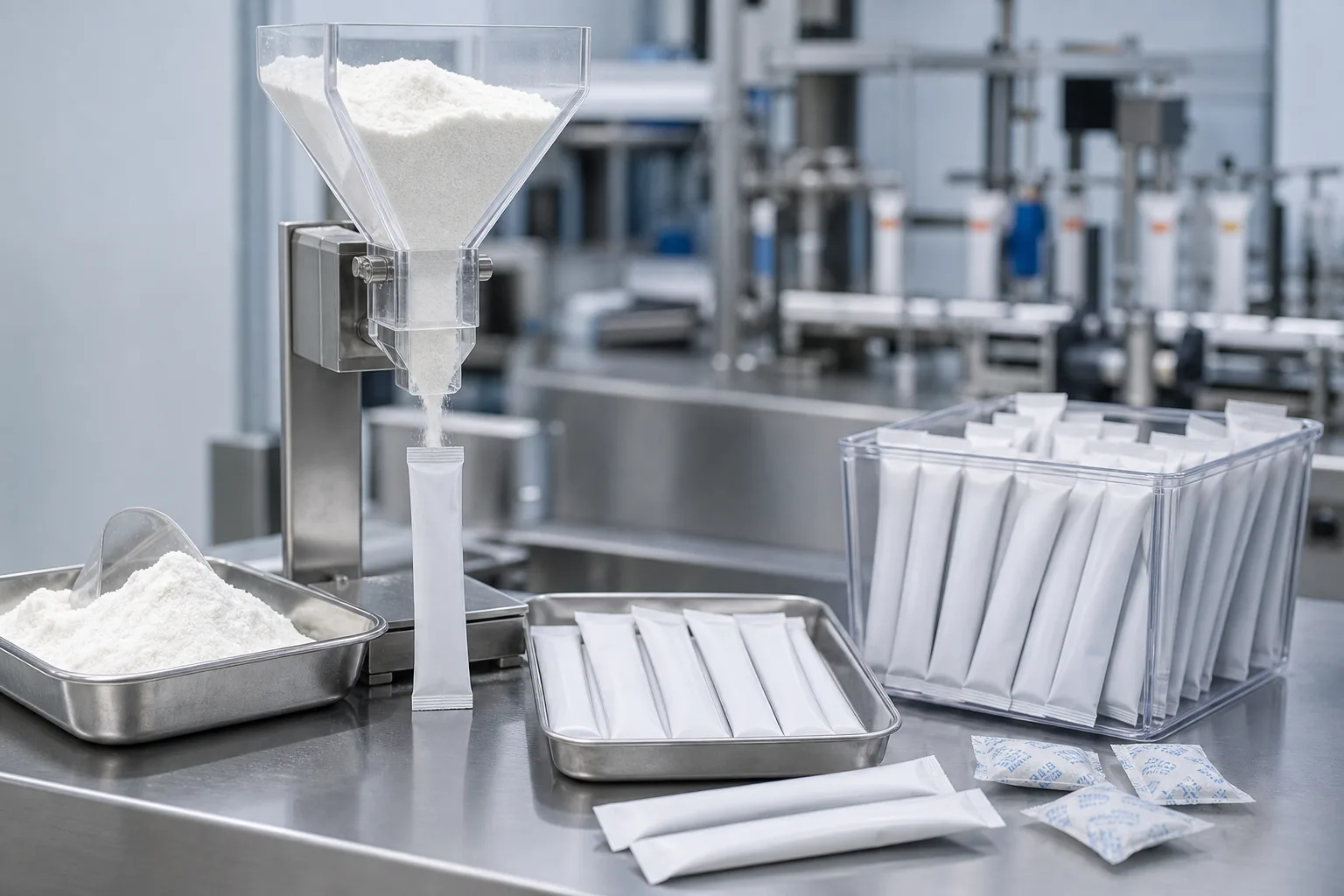
Stick packs make the convenience promise real, but they raise the bar
Stick packs are a natural fit for electrolyte powders because the use case is portable and repeatable. They are also unforgiving. If the powder is too bulky, too dusty, too sticky, too variable, or too sensitive to moisture, the line can punish the formula.
Packaging decisions should happen early, not after the flavor is approved. Brands need to know whether the formula fits the target stick size, whether the material has enough moisture protection, whether the tear and pour experience is clean, and whether the final pack feels premium enough for the price point.
Albert Max supports packaging strategy across bottles, jars, stick packs, and other formats, which lets the formulation team connect serving size and powder behavior to the package the consumer actually uses.
Claims have to stay useful and compliant
Hydration language can get sloppy fast. A dietary supplement brand should not imply that an electrolyte product treats dehydration, heat illness, disease, or medication side effects. The cleaner lane is structure/function and general wellness language that is truthful, substantiated, and paired with the required dietary supplement disclaimer where appropriate.
Useful claim territory may include supporting hydration, helping replenish electrolytes lost through sweat, supporting active lifestyles, or helping maintain fluid balance. The exact wording depends on the formula, substantiation, label context, and market channel.
FDA structure/function claim requirements and dietary supplement cGMP rules are not decorations. They affect product specifications, label review, batch records, testing logic, and how a brand should brief its manufacturer. Albert Max's quality systems are designed around controlled production, documentation, and practical compliance, not just attractive samples.
Mineral target
Select electrolyte forms and doses that fit taste, solubility, cost, and label strategy.
Flavor masking
Balance salt, bitterness, acidity, sweetness timing, aroma, and repeat-use fatigue.
Powder control
Check moisture behavior, density, flow, particle size, blending, and fill accuracy.
Packaging fit
Validate stick-pack size, barrier needs, pourability, serving weight, and line readiness.
What brand owners should define before requesting a quote
- Use case: everyday hydration, sports, travel, wellness routine, heat exposure, or functional beverage mix?
- Mineral profile: sodium-led, balanced electrolyte, low-sodium, magnesium-forward, or multi-mineral?
- Flavor lane: bright citrus, tropical, berry, mild spa-water, or salty-sour performance profile?
- Sweetener position: sugar-free, low sugar, naturally sweetened, or hybrid?
- Format: jar, pouch, scoop, stick pack, or multi-SKU system?
- Claim boundaries: what can be said confidently, and what should stay off the label?
For supplement brands
Building a hydration powder that tastes good and runs clean?
Albert Max helps supplement brands turn electrolyte powder concepts into production-ready formulas. Our team connects custom formulation, Flavor Masking Tech, bulk density testing, particle size control, packaging strategy, and cGMP production support so the finished product works in water, on the line, and on the label.
References
- NielsenIQ. Expo West 2026: Key Trends in Food, Beverage & Wellness.
- Food Business News. Hydration becoming key functional beverage trend.
- U.S. Food & Drug Administration. Structure/function claims.
- U.S. Food & Drug Administration. Notifications for structure/function and related claims in dietary supplement labeling.
- Electronic Code of Federal Regulations. 21 CFR Part 111 - Dietary supplement current good manufacturing practice.