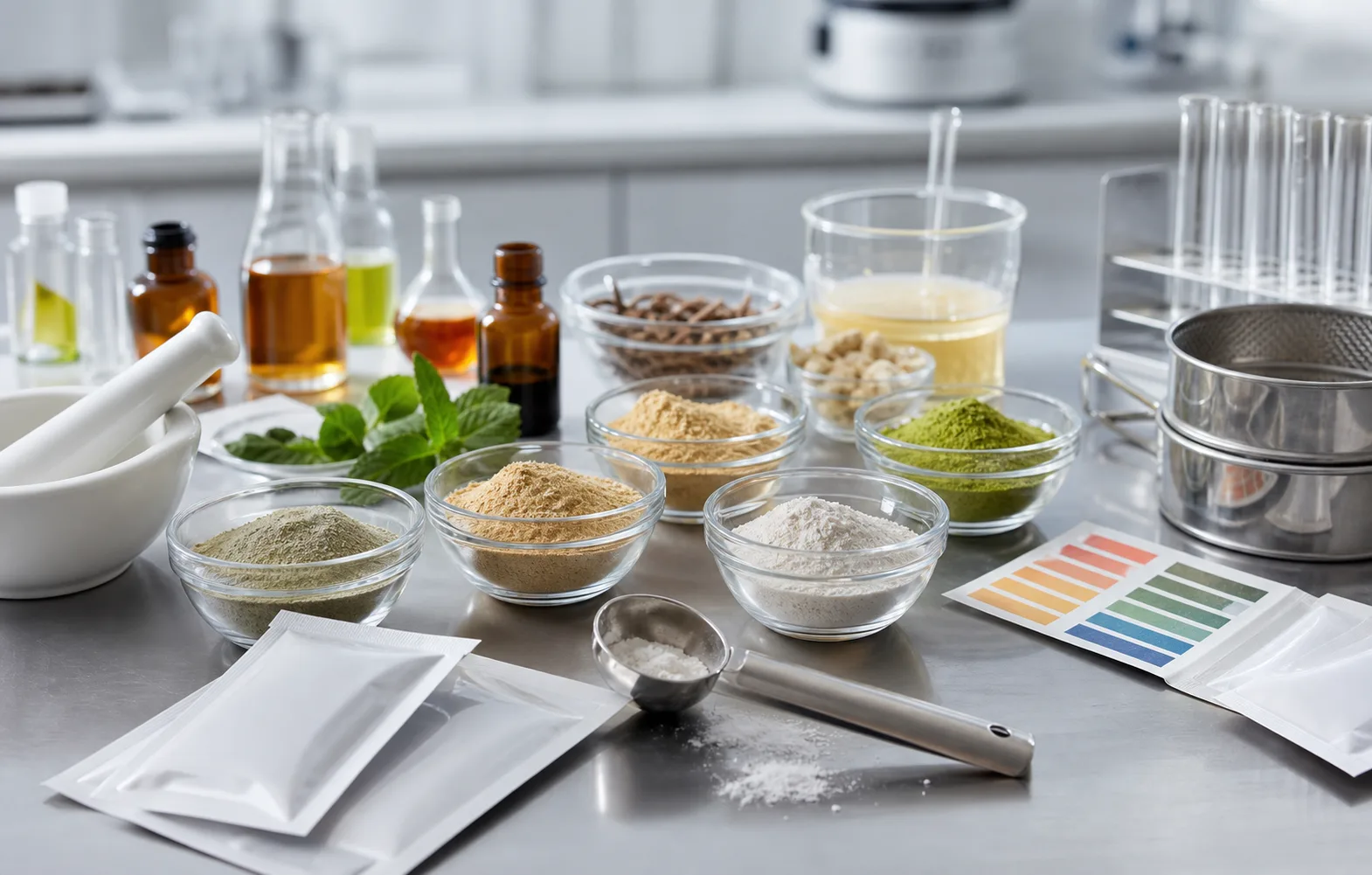
The fastest way to ruin a good supplement concept is to treat flavor masking as decoration. A bitter botanical, chalky mineral, sulfurous amino acid, or high-dose functional powder cannot always be fixed by adding more mango, berry, or vanilla. Sometimes more flavor just makes a bad formula louder.
Flavor masking starts before the flavor house brief. It starts with understanding the active load, serving size, delivery format, powder behavior, sweetener limits, acid profile, color expectation, and claim boundaries.
Not all bitterness behaves the same
Supplement brands often group taste problems under one word: bitter. In production, the problem is more specific. Botanicals can bring bitter, earthy, grassy, tannic, or astringent notes. Minerals can be metallic, salty, chalky, or drying. Amino acids can be bitter, sulfurous, or lingering. Caffeine can create a sharp back-end bitterness that becomes more obvious in low-sugar products.
Each profile needs a different control strategy. Acid can brighten citrus systems, but it can also sharpen bitterness. Sweetness can reduce perception, but too much sweetness creates fatigue. Aroma can distract from an off-note, but it cannot fix grit, sediment, or chalky mouthfeel.
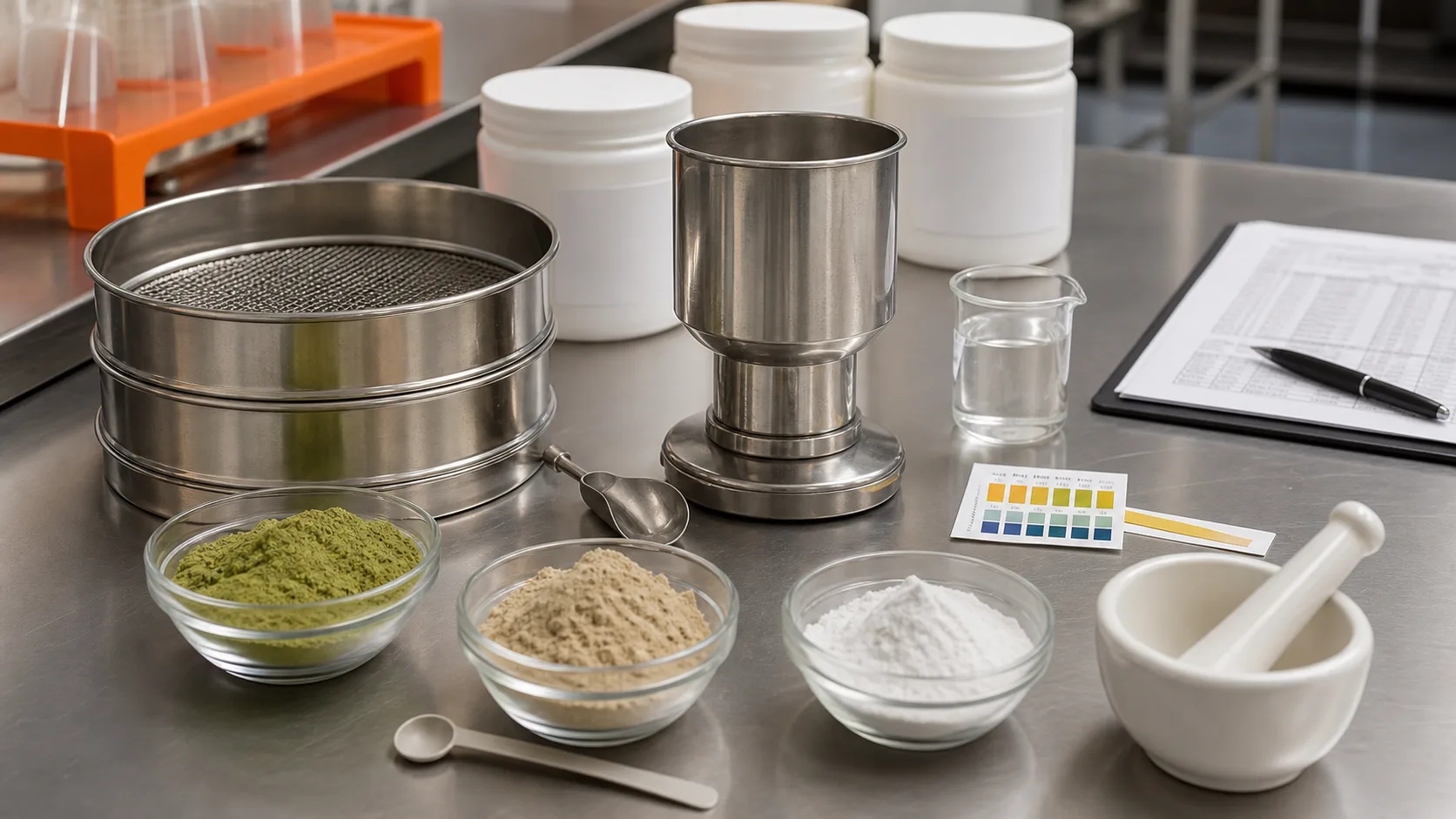
The active matrix comes first
A formulation team should pressure-test the active matrix before choosing the final flavor direction. Dose, solubility, particle size, color, odor, pH, and interaction with sweeteners all affect what the flavor system can realistically achieve.
| Ingredient challenge | Common sensory issue | Formulation response |
|---|---|---|
| Botanical extracts | Bitter, earthy, grassy, astringent | Use compatible flavor direction, acid balance, aroma support, and color expectation |
| Minerals | Metallic, salty, chalky, drying | Review mineral form, particle feel, acid profile, and mouthfeel support |
| Amino acids | Bitter, lingering, sulfurous, hard to sweeten | Control dose, sweetener blend, flavor strength, and aftertaste curve |
| High-fiber systems | Thick, gritty, viscous, dull flavor release | Match fiber type, hydration behavior, serving size, and mixing directions |
Masking is a system, not a single ingredient
A practical masking system usually combines several levers. Sweeteners reduce perception, acids shape brightness, flavors create the sensory direction, mouthfeel agents manage body, and processing controls keep the final powder consistent. The order matters. If the base powder is dusty, moisture-sensitive, or inconsistent in density, the flavor system may not distribute evenly from batch to batch.
That is why Albert Max treats sensory development and manufacturing review as one process. A sample has to taste good in water, but it also has to survive blending, filling, packaging, stability expectations, and quality documentation.
Map the off-notes
Identify bitter, metallic, chalky, earthy, sour, or lingering notes before selecting flavor.
Fit the format
Pressure-test powder tub, stick pack, capsule, or companion format against serving size.
Balance the system
Tune acid, sweetness, aroma, color, mouthfeel, and mixability together.
Check production
Review density, flow, fill weight, moisture behavior, and cGMP documentation.
Flavor direction should match the problem
Some flavors are better at hiding certain problems. Citrus and tropical systems can work well when the formula needs brightness and acidity. Berry systems can support broad consumer familiarity. Tea, hibiscus, matcha, and botanical directions can make some herbal notes feel intentional instead of defective. But there is no universal winner.
A bitter green powder with minerals may need a different solution than a caffeine-containing energy stick or a high-fiber gut health drink mix. The lazy answer is "make it fruit punch." The better answer is to build the sensory system around the actual active matrix.
Do not let flavor hide claim risk
Strong flavor can make a concept feel polished, but it does not solve regulatory risk. Dietary supplement claims still need to stay within structure/function boundaries and avoid disease-treatment language. That is especially important for products around energy, mood, stress, gut health, metabolic wellness, beauty, and sleep.
Formulation, label language, and quality controls should move together. Otherwise, the product can taste ready while the claims and production records are still a mess. That is the kind of mess nobody wants to discover after packaging is printed.
Manufacturing takeaway
A flavor-masked formula has to taste good and manufacture cleanly.
Albert Max can help brands evaluate bitter actives, mineral systems, botanical powders, amino acids, stick-pack formats, powder flow, blend uniformity, and compliant supplement positioning before production.
References
- Kerry. How Taste Is Becoming a Competitive Edge in Supplements.
- U.S. Food & Drug Administration. Structure/function claims.
- Electronic Code of Federal Regulations. 21 CFR Part 111 - Current Good Manufacturing Practice for Dietary Supplements.
- National Institutes of Health Office of Dietary Supplements. Magnesium fact sheet for health professionals.
- Institute of Food Technologists. Outlook 2026: Flavor Trends.