
You're eating less, the scale is moving, and then one morning you notice a fistful of hair in the shower drain. Or your legs feel weirdly tired climbing stairs. Or you're just exhausted in a way that doesn't match how well things seem to be going.
This isn't a coincidence. When you eat less, your body takes in fewer vitamins and minerals, and some GLP-1 users may face additional absorption challenges on top of that. Here's what the research actually says, and what's worth doing about it.
The Calorie Cut Comes with a Nutrition Cut, Here’s the Data
One of the ways GLP-1 weight management products work is by reducing appetite, which naturally leads to eating less. Studies show that calorie intake typically drops by 16% to 39% among users (Sibal et al., Nutrients 2025). The problem: fewer calories usually means fewer vitamins and minerals, too.
A research team in Slovenia analyzed real-world data from more than 460,000 adults and found (Koceva et al., Nutrients 2026):
- Within 12 months, 22.4% of GLP-1 users developed at least one nutritional deficiency
- Vitamin D was the most common, deficient in 13.6% of users by 12 months
- Iron-deficiency anemia affected 3.2%, and B-vitamin deficiencies showed up in 2.6%
One detail that often gets overlooked: a small pilot study found that 10 weeks of GLP-1 use was associated with a median 13% reduction in the gut's iron absorption capacity (Koceva et al., 2026, citing an unpublished pilot; larger studies are needed). So even if iron is in your diet, your body may not be absorbing all of it.
If you're also using metformin to manage blood sugar, common for many GLP-1 users, vitamin B12 depletion risk stacks on top of that through a separate mechanism.
A note on the data: These deficiency rates come largely from insurance claims and pharmacovigilance records, which can underestimate true prevalence. The authors flag this as a limitation. Still, the signal is consistent across multiple data sources.

You're Not Just Losing Fat, Muscle Loss Is the Hidden Cost
The number on the scale going down doesn't mean only fat is leaving. Researchers at the MRC Epidemiology Unit, Cambridge estimate that roughly 30–40% of weight lost during GLP-1-assisted weight loss may come from lean mass, muscle and other non-fat tissue, rather than fat alone (Spreckley et al., Int J Obes 2026). The risk is highest for adults over 65, women with lower baseline muscle mass, and people with sarcopenic obesity.
Protein: Get Enough, and Spread It Out
Current guidance from multiple research reviews suggests aiming for 1.2–2.0 grams of protein per kilogram of body weight per day, roughly 80–120 grams daily, well above the standard adult recommendation of 0.8 g/kg (Sibal et al., Nutrients 2025). A practical starting range with resistance training is 0.8–1.6 g/kg, scaling up based on activity level and body composition goals (Spreckley et al., Int J Obes 2026).
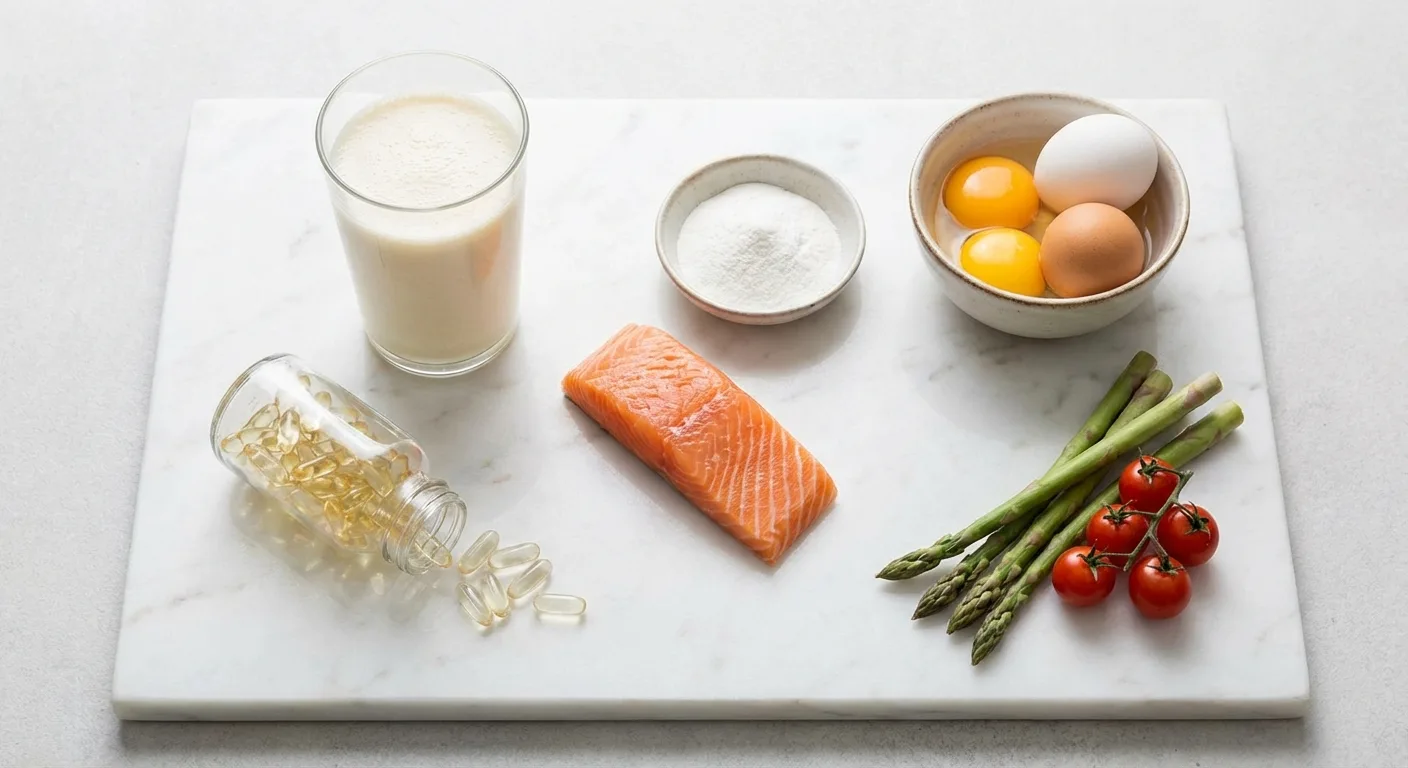
High-quality sources work best: whey protein, eggs, fish, and lean meats. For plant-based eaters, a blend of pea and rice protein covers the amino acid profile reasonably well. Spreading protein across 3–4 meals, aiming for 25–35 grams per sitting, supports muscle protein synthesis more effectively than loading it all into one meal.
Creatine: More Evidence Than Most People Expect
A systematic review from Texas A&M University covering 1,322 studies found that supplementing with creatine monohydrate during calorie restriction may help preserve muscle mass and support fat loss, with benefits seen even in adults aged 60–84 (Kreider & Stout, Nutrients 2021). A standard maintenance dose is 3–5 grams per day, and safety is well-established across a wide range of populations.
One important caveat: creatine works best paired with resistance training, weights, resistance bands, bodyweight squats. Without that stimulus, the benefits shrink considerably. There are no RCTs specifically in GLP-1 users; the evidence is extrapolated from caloric restriction and aging research.
Which Supplements Are Worth It, and Which Aren't
The market for “GLP-1 companion” supplements has exploded. Many products make bold claims with thin evidence. Here's a straightforward breakdown based on what the research actually supports:
Stronger Evidence, Worth Discussing With Your Provider
- Vitamin D (D3 form): Most common deficiency, 13.6% of users affected within 12 months (Koceva et al., 2026).
- Vitamin B12: Dual risk from reduced food intake plus metformin use.
- Iron: Especially relevant for women and those at anemia risk because intake may drop while absorption may also decline.
- Protein supplement: Multiple reviews support lean-mass preservation during caloric restriction.
- Creatine monohydrate: Systematic review evidence supports muscle protection, especially when paired with resistance training.
- Daily multivitamin/mineral: A practical bridging strategy when nutrient screening is not immediately available.
Weaker or No Evidence, Be Skeptical
- “GLP-1 booster” herbal blends: No clinical trial evidence, mostly unregulated claims.
- Collagen peptides: No randomized controlled trials in GLP-1 users, mostly marketing narrative.
- NMN / resveratrol / “anti-aging” stacks: No reliable clinical trials in a weight-loss support context.
- High-dose single antioxidant combos: No meaningful intervention studies in this user population.
The researchers behind the largest dataset on this topic put it plainly: Koceva et al. (Nutrients 2026) explicitly state that “current evidence does not support a one-size-fits-all micronutrient supplementation approach” for GLP-1 users. Test first, then supplement, not the other way around.
It Depends on Who You Are
Not everyone using GLP-1 products faces the same risks. A few groups that research flags as higher-priority:
Adults 65 and older: Muscle loss risk is highest in this group. Protein targets should lean toward the 1.5–2.0 g/kg end of the range. Vitamin D needs may be higher (NIH ODS recommends 800 IU/day for adults over 70). For B12, the methylcobalamin form may absorb more reliably in people with reduced stomach acid production, which becomes more common with age.
Women: Iron deficiency risk is higher due to menstruation combined with reduced dietary intake and potential absorption changes. Hair shedding is also a real concern: a real-world cross-sectional study of 152 GLP-1 users found a hair loss rate of 70.4%, with women at 3.57 times the risk of men (Alharbi & Alkhalifah, Skin Appendage Disord 2026). Hair loss is strongly tied to rapid weight loss (≥15% of body weight) and nutritional gaps, keeping ferritin above 30 ng/mL is one of the key intervention points.
Metformin users: B12 depletion risk compounds. Regular blood B12 testing, not waiting for symptoms, is a reasonable precaution.
Higher weight-loss trajectories: The more weight lost, the higher the theoretical nutritional risk. Staying on top of lab markers matters more, not less, as results accumulate.
People with prior GI surgery (e.g., gastric bypass): This is a special high-risk group. A published case report documented life-threatening malnutrition in a post-gastric-bypass patient who added GLP-1 therapy, severe enough to require ICU-level care (Madej et al., ACG Case Rep J 2026). If you have a history of bariatric surgery, consulting a clinician before starting GLP-1 products is strongly advisable.
How to Pick a Quality Product: Three Quick Questions
1. Is the form right?
Same nutrient, different forms, different absorption rates:
- Vitamin D: D3 (cholecalciferol) absorbs better than D2
- Vitamin B12: Methylcobalamin or hydroxycobalamin work well, especially for people with reduced stomach acid
- Iron: Ferrous forms (ferrous sulfate, gluconate) absorb better than ferric forms
- Calcium: Calcium citrate doesn't require stomach acid to absorb, helpful if GI symptoms are an issue
- Creatine: Stick with monohydrate. “Upgraded” forms cost more and haven't proven additional benefit
2. Is the dose reasonable?
More isn't better, and expensive doesn't mean better. NIH Office of Dietary Supplements (ods.od.nih.gov) provides evidence-based reference ranges for every major nutrient. For vitamin D specifically, many researchers suggest 1,000–2,000 IU/day during GLP-1-assisted weight loss, adjusted based on your serum 25(OH)D level.
3. Is it third-party tested?
The supplement industry has loose regulations. Look for products certified by NSF International, Informed Sport, or USP Verified, these indicate independent testing for label accuracy and absence of banned substances. A “specially formulated for GLP-1 users” label without third-party certification is a yellow flag.
Is This Right for Me?
Everything above is synthesized from peer-reviewed literature, but your situation is specific, and no single protocol fits everyone.
Before starting or adjusting any supplement routine during GLP-1-assisted weight loss, a reasonable baseline is to know where you stand on the nutrients that matter most. Labs worth considering at baseline: serum 25(OH)D, ferritin, serum B12, complete blood count, and serum magnesium. A recheck every 6 months lets you adjust based on what's actually happening, not guesswork (Sibal et al., Nutrients 2025; Spreckley et al., Int J Obes 2026).
If you're noticing increased hair shedding, persistent fatigue, or unusual muscle weakness during your weight loss journey, research suggests those symptoms may be worth investigating, they don't always just mean “adjustment phase.”
And the thing that matters most: supplements fill gaps, they don't build the foundation. Adequate protein, consistent resistance training, and a reasonably varied diet are what actually protect muscle and support long-term health. A well-chosen supplement stack can help cover what's missing, but it can't substitute for the basics.