Market Opportunity: The Category Is Reshuffling
The global cholesterol management supplement market is currently estimated at $7–12.5 billion, with a blended CAGR in the 5–8.5% range. Asia-Pacific is the fastest-growing region, with demand from middle-aged Chinese consumers — particularly the 40–60 age bracket in urban professional settings — driving incremental volume for both brand owners and contract manufacturers.
The more strategically important signal is the structural shift within the category:
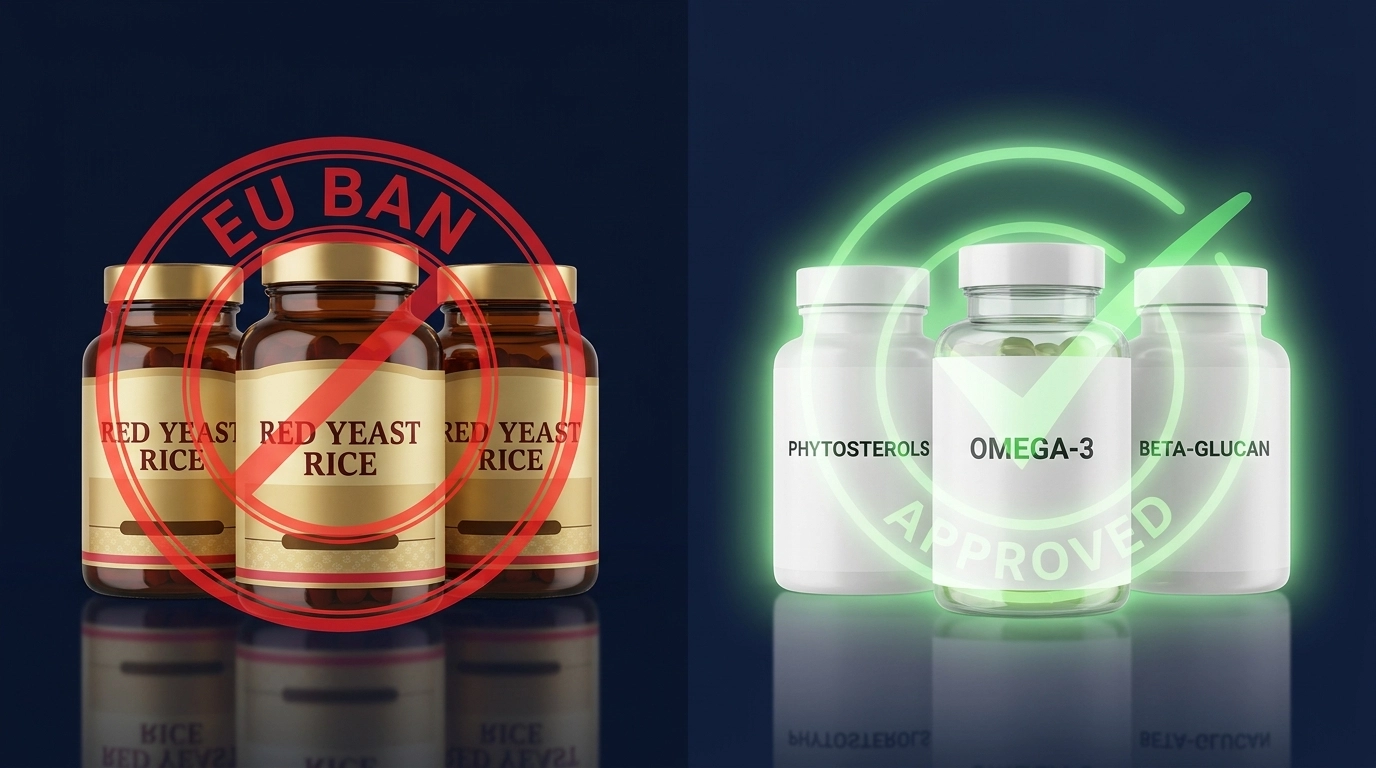
- Red yeast rice volume in Europe will collapse significantly — this is already settled
- Phytosterols are the established mainstream in Europe (Benecol and Flora ProActiv have done the consumer education work), with North America accelerating uptake
- High-concentration EPA fish oil is crossing from Rx into OTC and supplement channels, particularly in China
- Soluble dietary fiber is fusing with the gut health narrative, generating fresh growth momentum
For OEM brand owners, the implication is straightforward: product portfolios built around red yeast rice over the past five years need to be systematically rebuilt or reinforced over the next two to three.
Five-Ingredient Sourcing Deep Dive
1. Phytosterols / Phytostanols
Mechanism: Phytosterols are structurally similar to cholesterol and competitively occupy intestinal cholesterol absorption sites (micellar pathways), reducing uptake of both dietary and biliary cholesterol and thereby lowering circulating LDL.
Clinical data: A 2023 meta-analysis covering 125 trials found a mean LDL reduction of approximately 0.55 mmol/L (~10–12%) at typical intake levels. The dose-response relationship is linear from 0.6 to 3.3 g/day, plateauing beyond 3 g with a maximum reduction around 12%. Critical operational note: phytosterols must be consumed in divided doses with meals — concentrating the full daily dose at breakfast meaningfully blunts efficacy.
Regulatory status across three markets:
- FDA: Phytosterol esters carry an authorized health claim (21 CFR §101.83); 1.3 g/day qualifies for labeling "may reduce the risk of heart disease"
- EFSA: Authorized claim permitting declaration that plant sterols reduce blood LDL cholesterol at ≥3 g/day — the cleanest lipid-lowering claim in the European framework
- China Blue Hat: Listed in the Permitted Ingredient Catalogue for health foods; registration pathway supports "auxiliary lipid-lowering" function claim
OEM sourcing notes: Prioritize esterified forms (sterol esters) over free sterols — superior solubility and FDA claim eligibility. Major suppliers include Cargill (CoroWise®), ADM, and BASF. Require that β-sitosterol + campesterol + stigmasterol together constitute ≥80% of total sterol content. Recommended certifications: GRAS notification on file + USP <232> heavy metals testing.
⚠️ Formulation note: At higher doses (≥3 g/day), phytosterols may modestly reduce absorption of fat-soluble vitamins (β-carotene, vitamin E); consider including vitamin E in the formula as a countermeasure.
2. Soluble Dietary Fiber: Beta-Glucan / Psyllium Husk
Mechanism: Soluble fiber binds bile acids in the gut, interrupting enterohepatic recirculation and forcing the liver to draw on circulating cholesterol to synthesize replacement bile acids — indirectly lowering LDL. The mechanism is distinct from phytosterols, meaning the two can be combined for additive effect.
Clinical data:
- Oat/barley beta-glucan: ≥3 g/day reduces LDL by approximately 0.24–0.60 mmol/L (5–10%)
- Psyllium husk: 7 g soluble fiber/day reduces LDL by approximately 5–10% (the basis for the FDA authorized health claim)
Regulatory status:
- FDA: Psyllium husk carries an authorized health claim (21 CFR §101.81) — one of the most clearly defined fiber claims in the global regulatory landscape
- EFSA: Oat beta-glucan holds an Article 14 disease risk reduction claim at ≥3 g/day — the highest tier of EFSA authorization
- China Blue Hat: Eligible as an auxiliary lipid-lowering function ingredient via the registration pathway; human and animal trial data required
OEM sourcing notes: For oat beta-glucan, specify purity ≥70% (verified by McCleary enzymatic method). Psyllium husk: approximately 70% of global supply originates in Gujarat, India — require swelling index ≥40 mL/g, soluble fiber ≥70%, FSSC 22000 factory certification, and full batch COA.
⚠️ Supply chain note: Heavy metal (lead, arsenic) variation between psyllium husk batches can be significant. Require regular third-party heavy metal testing per batch — annual COA alone is not adequate.
3. Omega-3 EPA/DHA (Marine Fish Oil)
Mechanism: EPA and DHA primarily lower triglycerides by suppressing hepatic VLDL synthesis and accelerating TG clearance. Secondary cardiovascular benefits include anti-inflammatory activity, improved endothelial function, and stabilization of atherosclerotic plaques.
Clinical data:
- Standard dosing (1–2 g EPA+DHA/day): TG reduction ~10–15%
- High-dose (3–4 g/day): TG reduction of 20–50% in hypertriglyceridemic patients
- Important caveat: Conventional mixed EPA+DHA preparations may raise LDL-C modestly (driven primarily by DHA), making them a poor fit for formulas with LDL reduction as the primary claim. Pure EPA preparations (high-purity icosapent ethyl) do not raise LDL; the REDUCE-IT RCT (n=8,179) demonstrated a 25% reduction in major cardiovascular events at 4 g/day
Regulatory status:
- FDA: "Supports heart health" structure/function claim available; higher-dose preparations may qualify for a Qualified Health Claim
- EFSA: Authorized claims for "maintaining normal cardiac function" (≥250 mg/day) and "maintaining normal triglyceride levels" (2–4 g/day)
- China Blue Hat: Marine fish oil is included in the Nutrient Supplement Ingredient Catalogue (2023 edition); filing pathway — the fastest registration route
OEM sourcing notes: Specify concentrated re-esterified triglyceride (rTG) form with EPA+DHA ≥50–70% — superior bioavailability versus standard TG form. High-end positioning may justify high-purity EPA (≥90%). Oxidative stability must meet GOED standards (PV ≤5 meq/kg, TOTOX ≤26). Dual certification recommended: GOED member-sourced material + IFOS independent product testing.
⚠️ Label warning required: At doses ≥3 g/day, omega-3s may potentiate anticoagulant and antiplatelet agents (warfarin, aspirin); product labeling must include an appropriate cautionary statement.
4. Coenzyme Q10 (CoQ10)
Mechanism: CoQ10 is a core component of the mitochondrial electron transport chain, essential for ATP synthesis. It also functions as a potent antioxidant, reducing oxidative modification of LDL particles and protecting vascular endothelium. CoQ10 does not directly lower LDL; its cardiovascular positioning is "cellular energy metabolism + antioxidant protection."
Clinical data: The Q-SYMBIO trial demonstrated that 300 mg/day over two years reduced major adverse cardiovascular events by nearly 50%. A 2024 meta-analysis (medRxiv) showed significant improvement in ejection fraction (MD +5.6%, 95% CI 3.2–8.0%).
Statin-CoQ10 interaction — the key OEM formulation rationale: Statins inhibit HMG-CoA reductase, which also suppresses endogenous CoQ10 biosynthesis, reducing plasma CoQ10 levels by more than 50%. This makes CoQ10 a logical "statin adjunct" ingredient in cholesterol management complexes — not the primary lipid-lowering agent, but a meaningful value-add for the large segment of consumers already on statin therapy.
Regulatory status:
- FDA: "Supports heart health" and "supports cellular energy production" structure/function claims — no pre-market approval required
- EFSA: No authorized claims (applications have been rejected on insufficient evidence grounds); EU product copy requires conservative wording
- China Blue Hat: Included in the nutrient supplement filing catalogue; simplest regulatory pathway among the five ingredients
OEM sourcing notes: First-choice supplier: Kaneka Corporation (Japan, natural fermentation) — Kaneka Q10® (ubiquinone) or Kaneka QH® (ubiquinol). Specify purity ≥98% (HPLC), all-trans isomer content ≥95%. For older consumers or those with compromised absorption, ubiquinol (reduced form) is preferred. Soft gelatin capsules with an oily carrier matrix deliver meaningfully higher bioavailability than hard capsules or tablets.
5. Red Yeast Rice / Monacolin K (Last for a Reason)
Mechanism: Monacolin K in red yeast rice is chemically identical to lovastatin. It reduces endogenous cholesterol biosynthesis by inhibiting HMG-CoA reductase — which explains both its efficacy and why it is treated as an unapproved drug in multiple regulatory jurisdictions.
Clinical data: Monacolin K at 3–10 mg/day is equivalent to low-dose lovastatin therapy, with RCT data showing LDL reductions of approximately 15–25% — the most pronounced effect among all five ingredients reviewed here.
Regulatory status (the most complex picture):
- EU: All health claims revoked (Regulation EU 2024/2041); EFSA's 2025 final opinion declares "unsafe at any dose"; full prohibition expected by mid-2026. Recommendation: halt EU formulation planning immediately.
- USA: FDA has consistently classified red yeast rice products containing significant levels of monacolin K as unapproved new drugs, issuing warning letters to multiple brands. High compliance risk — avoid.
- China: Red yeast rice is recognized as a traditional food ingredient; registration pathway supports Blue Hat "auxiliary lipid-lowering" function claim; post-2024 SAMR enforcement has intensified; strict dose control and risk disclosure are mandatory.
⚠️ Multiple risk warnings: Concurrent use of red yeast rice and prescription statins carries serious risk of myopathy and rhabdomyolysis — product labels must state "contraindicated for individuals taking statin medications." Citrinin (mycotoxin) contamination must be rigorously controlled (EU limit: ≤0.2 mg/kg); require lot-by-lot third-party testing, not annual spot checks.
Three Formulation Strategies
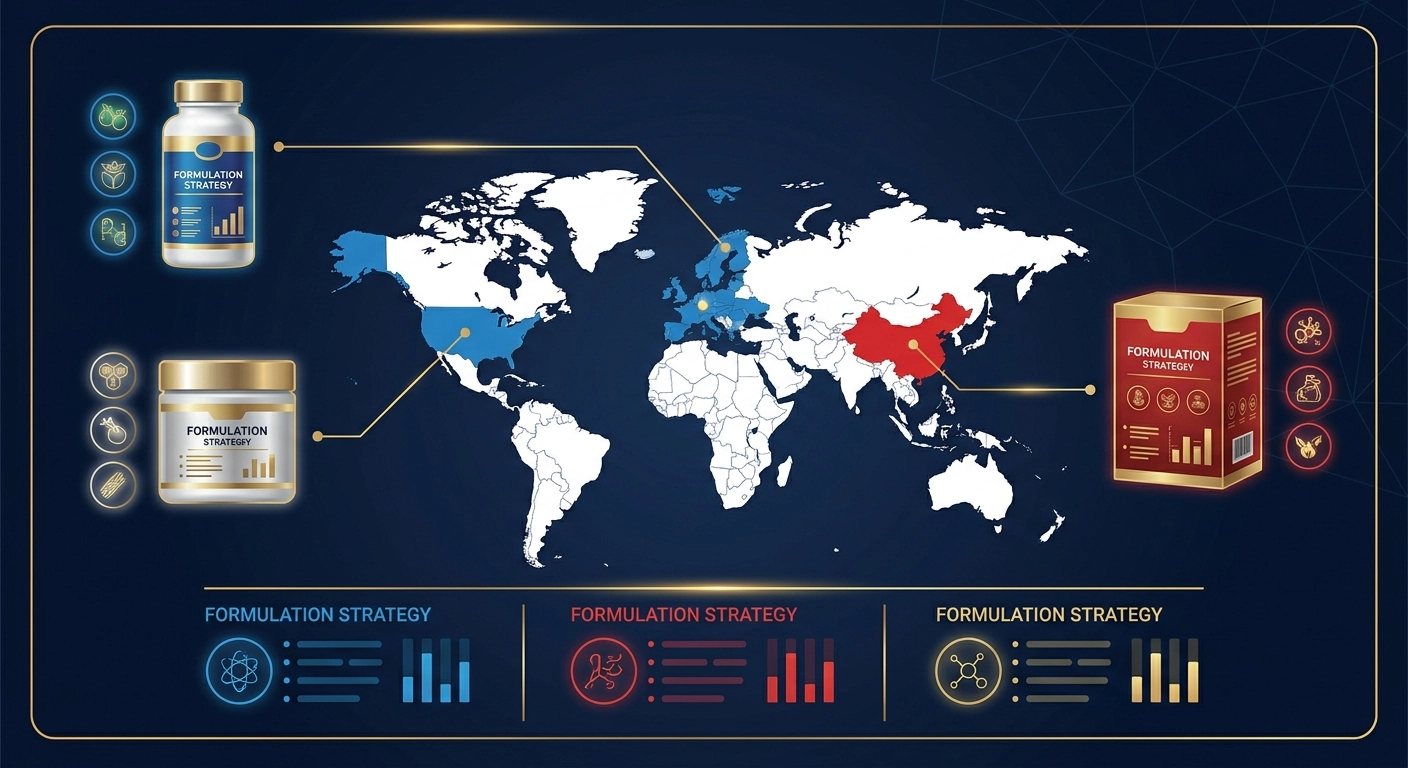
Once the ingredient picture is clear, formulation strategy comes down to target market. The following three frameworks are ready for internal evaluation:
Formula A: Global-Market Configuration (EU + USA + China tri-market compliant)
| Ingredient | Daily Dose | Claim Capability |
|---|---|---|
| Phytosterol esters | 2 g | FDA + EFSA dual-authorized |
| Oat beta-glucan | 3 g | EFSA Article 14 authorized |
| EPA/DHA (rTG form) | 1 g | FDA + EFSA dual-authorized |
Three independent lipid-lowering mechanisms operating in parallel: LDL reduction ~10% (phytosterols) + increased biliary cholesterol excretion (fiber) + TG reduction 10–15% (omega-3). Zero regulatory risk. Strongest claim portfolio. Suited to brands pursuing a unified SKU across markets.
Formula B: China-First Configuration (Blue Hat Registration Pathway)
| Ingredient | Daily Dose | Registration Route |
|---|---|---|
| Marine fish oil (EPA+DHA ≥50%) | 500 mg | Filing — fastest route |
| Red yeast rice extract | Monacolin K 3–6 mg | Registration — full safety dossier required |
| Coenzyme Q10 | 100 mg | Filing |
Suited to brands with established China market presence and Blue Hat registration resources. Mandatory label statements: contraindicated for individuals taking statins; consult physician before use; periodic liver function monitoring recommended for long-term use.
Formula C: EU-Priority Configuration (Zero Red Yeast Rice)
| Ingredient | Daily Dose | Claim Capability |
|---|---|---|
| Phytosterol esters | 2 g | EFSA authorized |
| EPA/DHA (rTG form) | 1 g | EFSA authorized |
| Oat beta-glucan | 3 g | EFSA Article 14 authorized |
| CoQ10 (ubiquinol) | 100 mg | Structure/function claim |
Three lipid-modulating mechanisms plus cardiovascular protection, with three stackable EFSA-authorized claims. CoQ10 is positioned around "supporting cardiac energy metabolism," reinforcing the overall product value proposition. Appropriate for premium European functional supplement positioning.
Compliance Quick-Reference Matrix
| Market | Red Yeast Rice | Phytosterols | Beta-Glucan | Omega-3 | CoQ10 |
|---|---|---|---|---|---|
| EU | ❌ Claims revoked; full ban ~mid-2026 | ✅ Authorized claim | ✅ Article 14 authorized | ✅ Authorized claim | ⚠️ No authorized claim |
| USA | ⚠️ Unapproved drug risk | ✅ Authorized claim | ✅ Authorized claim | ✅ Authorized/Qualified claim | ✅ Structure/function claim |
| China | ✅ Blue Hat (strict dose control required) | ✅ Blue Hat registration | ✅ Registration pathway | ✅ Filing pathway | ✅ Filing pathway |
| Canada | ⚠️ Permitted, cap at 1 mg/day | ✅ | ✅ | ✅ | ✅ |
Compliance Is Your Moat
What happened to red yeast rice in the EU is not an isolated incident — it is an illustration of regulators systematically tightening the boundary between efficacy claims and safety requirements. Much of the supplement industry spent the past decade benefiting from regulatory arbitrage. That window is closing, market by market.
For OEM brand owners, building compliance capability into sourcing decisions from the outset is the only durable competitive advantage — not by threading regulatory needles, but by producing the best products in the lanes where the rules are clearest.
The phytosterol + beta-glucan + high-purity EPA combination has well-defined claim pathways across all three major regulatory frameworks, a robust clinical evidence base, and a mature supply chain. This is currently the lowest-risk, highest-claim-capability ingredient combination available in the cholesterol management category.
Formulation strategy is only the starting point. Pre-market compliance review, supplier auditing, Blue Hat registration sequencing, and label claim boundaries all require specialist coordination. If you are evaluating ingredient strategy for your next product — or need a market-specific formulation compliance review — let's talk.
References
- FDA 21 CFR §101.83 — Authorized health claim for phytosterol esters — ecfr.gov
- FDA 21 CFR §101.81 — Authorized health claim for psyllium husk soluble fiber — ecfr.gov
- Commission Regulation (EU) 2024/2041 — Revocation of Monacolin K health claims — agrinfo.eu
- EFSA Journal 2025:9276 — Final safety opinion on monacolins from red yeast rice — efsa.onlinelibrary.wiley.com
- NutraIngredients: EFSA declares monacolins from red yeast rice unsafe at any dose (2025-03-13) — nutraingredients.com
- NutraIngredients: EU monacolin ban 2026 — heart health alternatives (2026-03-12) — nutraingredients.com
- Demonty et al. — Dose-response meta-analysis of phytosterols and LDL reduction (Mol. Nutr. Food Res. 2014) — PubMed:24780090
- Phytosterol lipid-lowering meta-analysis (Nutr Metab Cardiovasc Dis, 2023) — nmcd-journal.com
- EFSA Scientific Opinion — Oat beta-glucan and reduced risk of coronary heart disease (2010) — efsa.onlinelibrary.wiley.com
- EFSA Scientific Opinion — Beta-glucan and maintenance of normal blood cholesterol levels (2011) — efsa.onlinelibrary.wiley.com
- Omega-3 dose-response lipid meta-analysis (JAHA 2023) — ahajournals.org
- CoQ10 cardiovascular systematic review (medRxiv 2024) — medrxiv.org
- CoQ10 and statin-induced myopathy double-blind RCT — PMC9495827
- GOED Voluntary Monograph, 2022 edition — goedomega3.com
- China health food registration analysis 2024 (CIRS Group) — cirs-group.com
- Global cholesterol management supplement market report (Future Market Insights, 2024) — globenewswire.com
- Red yeast rice fact sheet — NCCIH/NIH — nccih.nih.gov