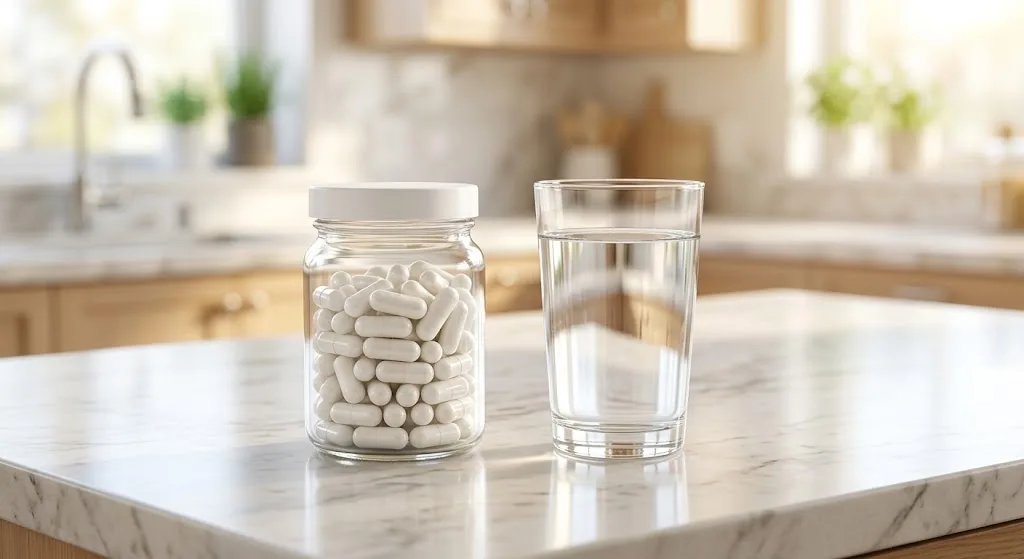
Women's health supplement strategy has spent years talking about beauty, hormones, stress, and energy. In 2026, a quieter opportunity is becoming harder to ignore: bone and joint longevity.
This is not a medical-treatment lane. It is a daily wellness lane for consumers who want to keep moving, training, traveling, working, and aging with more confidence. For brand owners, the opportunity is to build compliant formulas around mobility, structural support, and active aging without drifting into disease claims.
The category is bigger than calcium tablets
Calcium still matters, but the modern bone and joint conversation is broader. It now touches collagen peptides, type II collagen positioning, magnesium, vitamin D, vitamin K2, vitamin C, boron, plant-based minerals, omega-3 or softgel companions, and formats that consumers will actually repeat.
Market reports continue to point to growth in bone and joint health supplements, driven by aging consumers, osteoporosis awareness, arthritis-related concern, e-commerce, personalized nutrition, and demand for more advanced formulations. The important point for brands is not the exact forecast number. It is that bone and joint support is no longer a one-SKU retirement product.
| Product lane | Brand opportunity | Manufacturing reality |
|---|---|---|
| Bone mineral support | Calcium, magnesium, vitamin D/K2, boron, and trace mineral concepts | Serving size, mineral density, flow, capsule count, and claim review matter early |
| Collagen mobility | Joint, tendon, connective tissue, beauty-plus-mobility, and active aging positioning | Powder taste, dose size, solubility, source story, and allergen review shape format |
| Softgel companions | Vitamin D, omega oils, CoQ10, or oil-based companion products | Fill chemistry, oxidation, packaging, and softgel stability need tighter controls |
| Daily routine systems | Capsule plus powder bundles, stick packs, AM/PM routines, or multi-format lines | Portfolio architecture must avoid overloading one serving with everything |
Women-focused brands need sharper positioning
A bone and joint formula for women should not sound like a generic senior supplement with prettier packaging. The consumer story is different: active aging, mobility, strength routines, post-workout recovery, beauty-from-within overlap, and long-term wellness planning.
That does not mean making bigger claims. It means making better product decisions. A collagen powder can support a beauty-plus-mobility routine. A capsule can keep a mineral or botanical blend easy to repeat. A softgel can handle oil-based nutrients that do not belong in a dry powder. Albert Max recently covered this broader decision process in our article on choosing capsules, powders, softgels, and stick packs.
Product truth
Mobility sells the routine
Consumers understand staying active more easily than abstract longevity language.
Claim discipline
Support, not treatment
Keep copy focused on structure, movement, daily wellness, and healthy aging support.
Format strategy
One bottle may not fit
Some concepts work better as a powder, capsule, or softgel companion than one overloaded SKU.
Collagen helps connect beauty and mobility
Collagen is useful because it already sits between beauty-from-within, sports recovery, joint support, and healthy aging. That flexibility is valuable, but it also creates sloppy formulas when brands try to make one ingredient carry every possible benefit story.
The better move is to define the job. A hydrolyzed collagen powder may fit a daily beauty and mobility routine. A native type II collagen capsule may fit a lower-dose joint positioning. A mineral-plus-collagen system may require a powder for dose and a capsule or softgel for companion ingredients. For a deeper ingredient view, see Albert Max's guide to collagen source selection for formulators.
Minerals are not easy just because they are familiar
Calcium, magnesium, and trace minerals can create real development friction. They can be bulky, chalky, gritty, reactive, difficult to flavor, or hard to fit into a clean capsule count. Vitamin D and K2 raise different questions around potency, oil compatibility, overage logic, label clarity, and format.
That is where brand owners need manufacturing feedback before the formula is locked. A concept that looks elegant in a spreadsheet can become a rough consumer experience or a difficult production run if density, flow, serving size, and packaging are ignored.
Build a product system, not a claim pile
The strongest bone and joint longevity products will not be the ones with the longest label panel. They will be the ones with a clear consumer, a believable routine, controlled claims, and a format that matches the ingredients.
That could mean a collagen stick pack for daily routine, a mineral capsule for low-dose support, a softgel companion for vitamin D or omega oils, or a bundle that keeps each format in its lane. Albert Max supports custom formulation, capsule, powder, and softgel manufacturing, and quality systems that help brands make those choices early.
Brand takeaway
Bone and joint longevity is a format strategy.
The opportunity is real, but the formula has to be disciplined. Start with the consumer routine, choose the right format, soften unsupported claims, and build controls before scale-up.
References
- NIH Office of Dietary Supplements. Calcium Fact Sheet for Health Professionals.
- NIH Office of Dietary Supplements. Vitamin D Fact Sheet for Health Professionals.
- NIH Office of Dietary Supplements. Magnesium Fact Sheet for Health Professionals.
- The Business Research Company. Bone And Joint Health Supplements Global Market Report.
- Zdzieblik D, Oesser S, Gollhofer A, Konig D. Specific Collagen Peptides Improve Bone Mineral Density and Bone Markers in Postmenopausal Women. Nutrients. 2018.