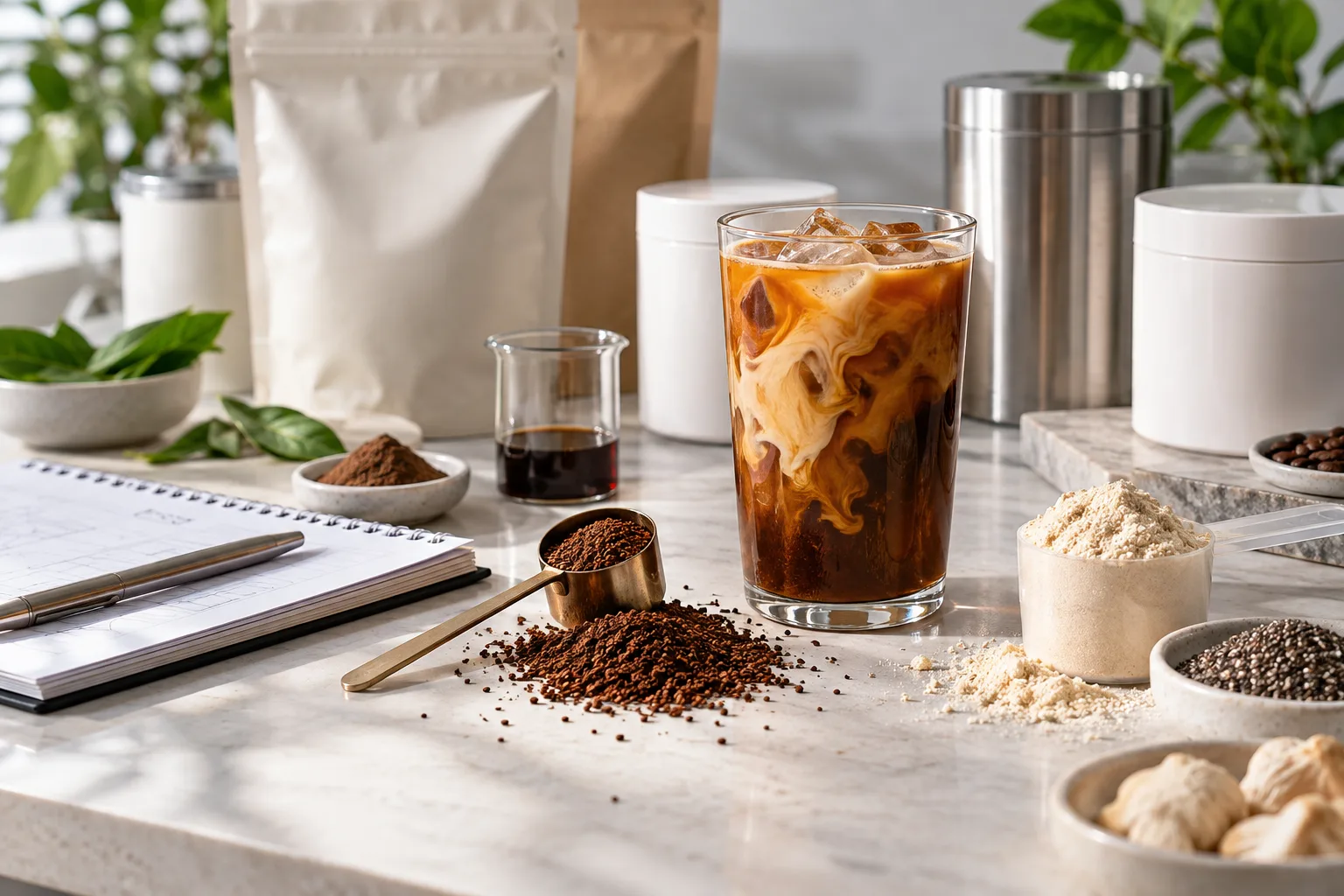
Functional coffee is crossing an important line. It is not only mushroom coffee from niche wellness brands anymore. Large coffee companies, supplement brands, and beverage developers are all testing the same idea: take a daily habit consumers already understand, then add a credible functional reason to repeat it.
For supplement brand owners, that makes functional coffee attractive. It can sit at the intersection of protein, collagen, focus, gut health, energy, beauty, and daily routine. It also creates a product development trap: coffee is unforgiving. If the product tastes burnt, turns gritty, hides caffeine poorly, or makes claims it cannot support, the repeat-use promise falls apart.
The trend is moving from novelty to format strategy
Recent category coverage points to a broader market shift: functional coffee concepts are expanding into protein, prebiotic, focus, energy, and collagen directions, with mainstream instant coffee launches now joining the field. That matters because mainstream participation usually raises consumer expectations around price, taste, convenience, and consistent daily use.
The opportunity is not simply "add mushrooms to coffee." Stronger concepts start with the consumer moment. Is this a morning protein ritual? A low-sugar energy alternative? A collagen coffee creamer? A focus blend with smoother stimulation? A gut-health coffee for consumers who already buy prebiotic powders?
| Functional coffee lane | Why brands care | Manufacturing question |
|---|---|---|
| Protein coffee | Connects high-protein demand with an existing daily caffeine routine | Can the powder disperse without clumping, chalkiness, or heat-related texture problems? |
| Collagen coffee | Fits beauty-from-within and active-aging routines without a separate shake | Can the serving deliver meaningful collagen while keeping taste, mouthfeel, and pack size clean? |
| Focus coffee | Pairs caffeine with ingredients like L-theanine, mushroom extracts, or B vitamins | Is caffeine disclosed clearly, and are claims kept in a compliant structure/function lane? |
| Prebiotic coffee | Links coffee with gut-health language and daily fiber routines | Can fiber load, solubility, viscosity, and flavor survive a real consumer preparation? |
Daily ritual is the real product promise
The best functional coffee products are not trying to replace every supplement in the cabinet. They win when the formula respects a behavior consumers already repeat. A scoop in iced coffee, an instant stick pack at the office, a creamer-style powder, or a capsule companion for coffee drinkers can each make sense if the serving is easy.
That is why format strategy matters. Albert Max has covered the broader decision in our guide to choosing capsules, powders, softgels, and stick packs. Functional coffee should go through the same pressure test: dose, taste, serving size, packaging, moisture, and repeat behavior before brand copy is written.
Caffeine turns this into a quality and labeling issue
Coffee brings a built-in stimulant story, but functional coffee brands still need discipline. The FDA has warned consumers about pure and highly concentrated caffeine in dietary supplement products, especially bulk powdered and liquid forms. A functional coffee formula is different from selling pure caffeine, but the warning is still a useful reminder: caffeine level, serving directions, warnings, and consumer context cannot be an afterthought.
For brand owners, the practical move is to design caffeine deliberately. A product may rely on coffee solids, added caffeine, guarana, green tea extract, or no added stimulant at all. Each choice changes label language, testing, warning review, flavor, consumer tolerance, and the way the product sits beside energy, focus, and mood claims.
Stronger lane
Daily focus support
Position around normal focus, routine, and clean sensory experience, with substantiation behind the language.
Riskier lane
Drug-like stimulation
Avoid extreme energy promises, unsafe serving directions, or vague "no crash" claims that the formula cannot support.
Brand discipline
Disclose the stimulant story
Know the caffeine source, caffeine level, serving use, and warning logic before production.
Ingredient stacks should stay believable
Functional coffee can become a messy shopping cart fast: coffee, collagen, protein, fiber, mushrooms, adaptogens, vitamins, minerals, sweeteners, creamers, flavors, and flow aids. More ingredients do not automatically create a better product. They usually create more taste conflicts, density differences, moisture risk, claim-review work, and supply-chain documentation.
Brands can build a cleaner path by choosing one lead benefit and one or two supporting reasons to believe. A protein coffee does not need to also be a complete nootropic, beauty, gut-health, and immunity product. A collagen coffee can reference beauty or active-aging positioning without pretending to solve every wellness goal. Albert Max's articles on beauty hydration trends and clean energy and nootropic trends show how adjacent lanes can overlap without becoming one overloaded formula.
Where Albert Max sees the opportunity
The strongest opportunities are practical: protein coffee stick packs, collagen coffee creamers, focus coffee powders, prebiotic coffee concepts, and capsule or powder companions that help brands extend a daily routine. The weakest concepts are those that ignore the product experience and treat coffee as a trendy carrier for too many actives.
Albert Max can help evaluate whether a functional coffee concept should be a powder, stick pack, capsule, or multi-SKU system. The same development process should connect formula feasibility, flavor masking, caffeine strategy, packaging, cGMP records, and compliant claims. See our companion Inside Albert Max article on functional coffee powder manufacturing controls for the production side.
Manufacturing takeaway
Coffee can carry the routine. It cannot carry sloppy formulation.
Functional coffee is a promising 2026 product lane when the benefit story, serving experience, caffeine logic, and manufacturing controls are designed together.
References
- FoodNavigator. Folgers functional coffee launches with protein, prebiotic blends.
- BeverageDaily. Functional coffee trends: nootropics, gut health, collagen, RTD.
- U.S. Food & Drug Administration. FDA warns consumers about pure and highly concentrated caffeine.
- NIH Office of Dietary Supplements. Caffeine in the Dietary Supplement Label Database.