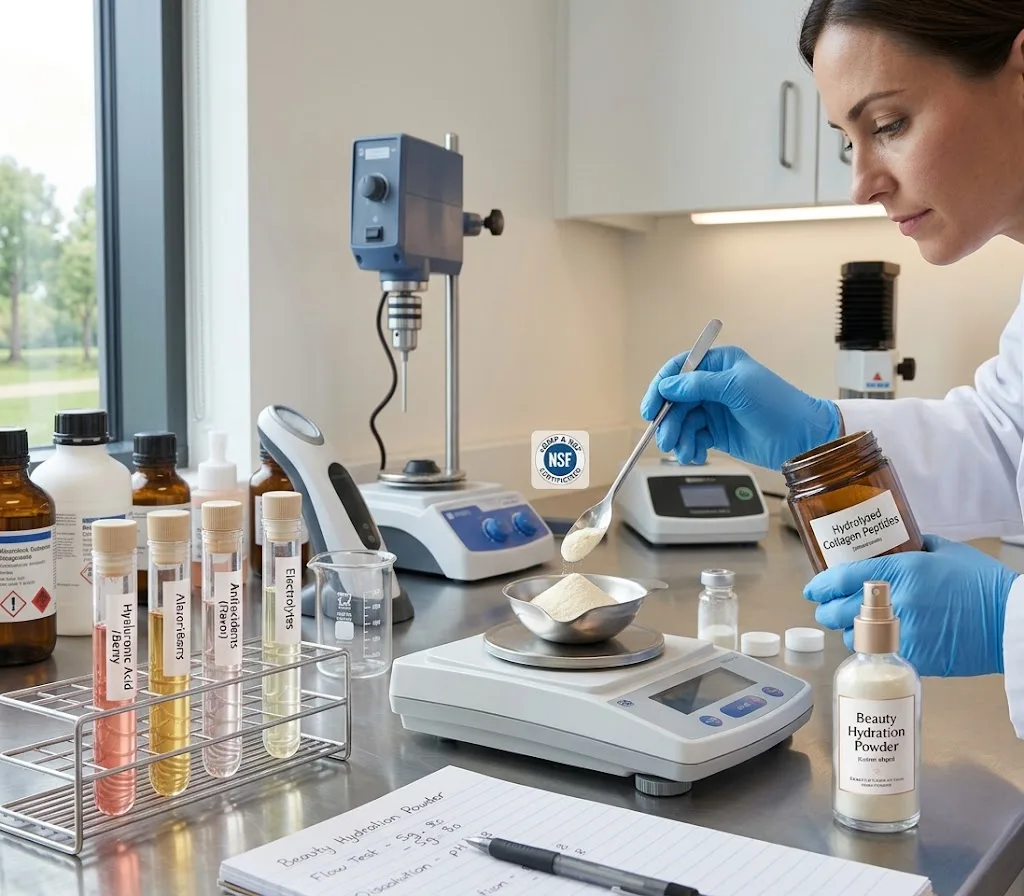
A beauty hydration powder can look effortless on the front of pack: collagen, hyaluronic acid, electrolytes, vitamin C, maybe a fruit flavor, maybe a stick pack. On the manufacturing side, that same concept can turn into a formula full of sensory, flow, moisture, and claim problems.
That is the real work behind beauty hydration powder formulation. The formula has to taste refreshing, dissolve well enough for the use occasion, fit into the package, hold up during production, and support compliant label language. A trend deck can ignore those constraints. A production line cannot.
Start with the serving, not the ingredient wish list
The first question is how the customer will use the product. A 3 gram stick pack for a water bottle is a different product from a 12 gram collagen scoop. A capsule beauty formula is different again. If the serving format is chosen too late, the formula may end up too bulky, too salty, too foamy, or too expensive for the launch plan.
Albert Max starts by pressure-testing the intended use occasion, active load, flavor expectation, and packaging format together. That keeps the product from becoming a pretty label wrapped around a formula that never belonged in a packet.
| Ingredient system | What it can add | What has to be controlled |
|---|---|---|
| Collagen peptides | Familiar beauty-from-within positioning and flexible powder use | Dose, odor, foam, mouthfeel, sourcing, and flavor coverage |
| Hyaluronic acid | Skin hydration story and low-dose formulation flexibility | Texture, dispersion, blend uniformity, and substantiation |
| Electrolytes | Hydration occasion and daily-use relevance | Salty, bitter, metallic, or drying notes, plus moisture behavior |
| Vitamin C and minerals | Nutrition support and beauty routine familiarity | Acidity, interactions, color, taste, and claim discipline |
| Botanicals or antioxidants | Differentiation and premium positioning | Bitterness, color drift, supply quality, and overclaiming risk |
Taste is where many beauty powders lose repeat use
Beauty hydration formulas often combine ingredients that do not naturally drink like a pleasant beverage. Collagen can bring protein notes. Minerals can taste salty, metallic, or bitter. Acids can sharpen the profile but also expose other off-notes. Sweeteners can linger. Botanical extracts can add color and bitterness.
This is why flavor work should happen while the formula is still flexible, not after every ingredient and dose has been locked. Albert Max looks at flavor direction, acidity, sweetness, aftertaste, color, aroma, and mouthfeel together, using the same practical logic described in our flavor masking guide for bitter actives.
Powder behavior can make or break stick packs
Beauty hydration concepts often end up in stick packs because the format feels premium, portable, and easy to sample. But a stick pack line needs powder that moves predictably. Bulk density, particle size, dusting, clumping, electrostatic behavior, and moisture pickup all affect fill weight, seal quality, speed, and rejects.
That is especially important when the formula includes hygroscopic minerals, acids, fine powders, flavors, or small amounts of high-value actives. Our powder stick pack manufacturing controls article goes deeper on those production variables.
Concept fit
Use occasion, serving size, actives, flavor target, and package format.
Bench work
Solubility, pH, off-notes, mouthfeel, color, and early stability signals.
Line readiness
Density, flow, packet fit, fill weight, moisture control, and seal quality.
QA review
Specifications, claims, MMR details, testing plan, and cGMP documentation.
Claims need to be designed with the formula
Beauty language can create risk when it promises too much. FDA notes that structure/function claims may describe the role of a nutrient or dietary ingredient in normal structure or function, but the company must have substantiation and avoid disease claims. That matters for skin, hair, hydration, aging, inflammation, hormones, acne, and detox language.
For brands, the practical move is to write the claim guardrails early. If the formula only supports a general wellness or nutrient-support story, the package should not drift into clinical-sounding promises. A compliant concept can still be desirable. It just has to be honest about what the supplement is meant to do.
How Albert Max helps brands turn the concept into a product
A beauty hydration powder should be developed as one system: formula, flavor, package, process, and claim strategy. Albert Max can support ingredient selection, collagen source evaluation, HA handling, electrolyte balancing, flavor masking, powder behavior review, packet or jar strategy, quality controls, and cGMP manufacturing documentation.
If the brand is still deciding whether the product belongs in powder, stick pack, capsule, or softgel form, our team can also help compare formats before the concept gets boxed into the wrong manufacturing path. The trend article on beauty hydration supplements explains why that format choice is becoming a real strategic decision.
For supplement brands
Build the beauty formula for the real serving moment.
Albert Max helps brands develop beauty hydration powders that can taste good, flow properly, fit the package, support compliant claims, and scale under cGMP controls.
References
- Moltó-Balado P, et al. Oral Collagen Supplementation for Skin Hydration and Elasticity: A Systematic Review and Meta-Analysis.
- Sun Q, et al. Effectiveness of Dietary Supplement for Skin Moisturizing in Healthy Adults. Frontiers in Nutrition.
- Michelotti A, et al. Oral intake of a new full-spectrum hyaluronan improves skin profilometry and ageing. European Journal of Dermatology.
- eCFR. 21 CFR Part 111 - Current Good Manufacturing Practice for Dietary Supplements.
- U.S. Food & Drug Administration. Structure/function claims.