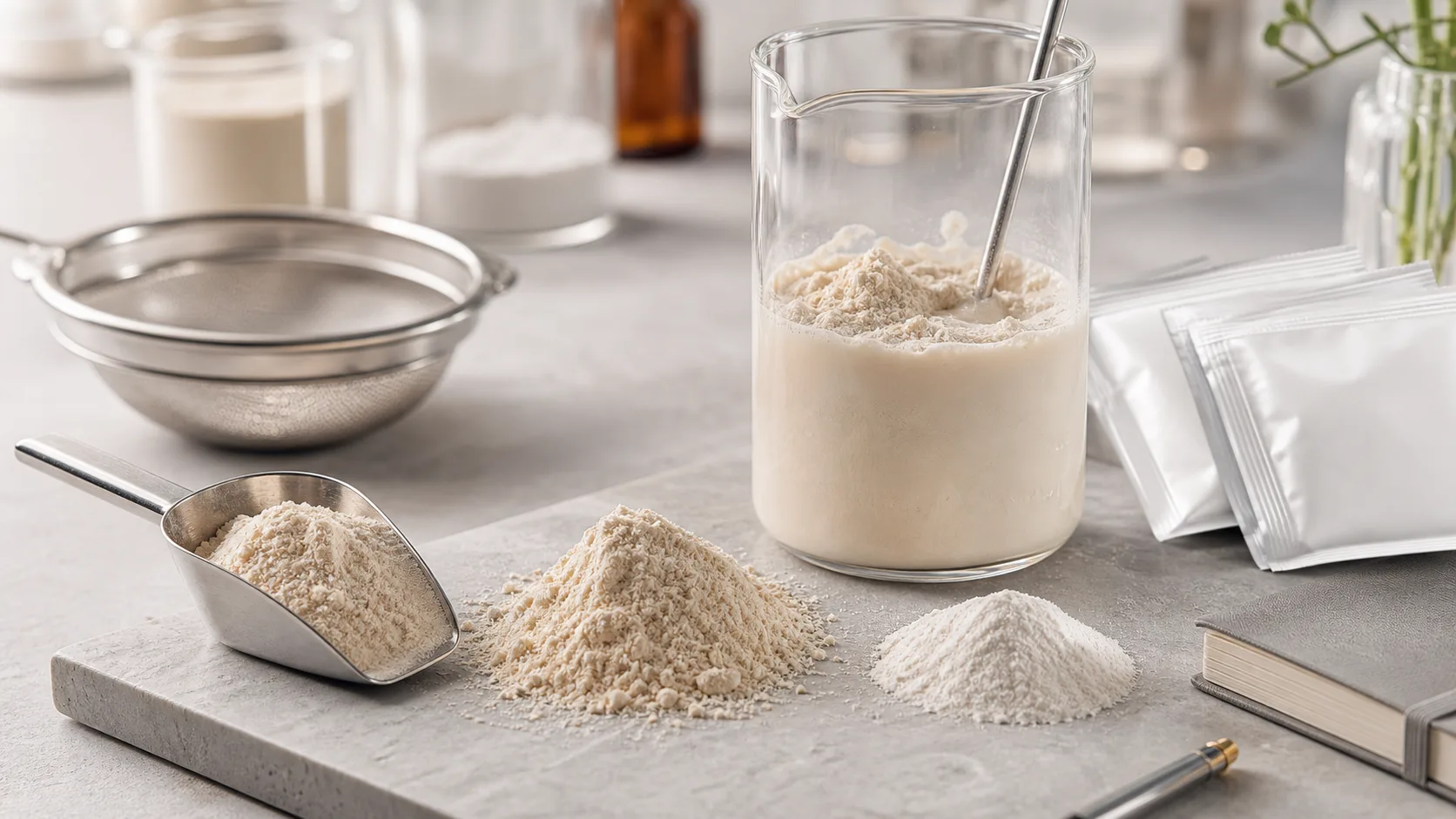
On a concept deck, "high protein + high fiber" looks clean. It sounds like a perfect answer to 2026 consumer demand: more nutrient density, more digestive support, and a more complete daily nutrition routine. Then the first bench sample comes back too thick, too gritty, too sweet, too bland, or impossible to drink without a blender.
That is not a small problem. For protein fiber powder formulation, sensory performance is not decoration. It determines whether the consumer finishes the first pouch, repurchases the second, and believes the brand understands their routine.
The hard part is that protein and fiber do not fail independently. They interact. A fiber that works beautifully in a beverage may thicken aggressively when paired with a protein system. A protein base that tastes acceptable on its own may become chalky when fiber changes mouthfeel. A powder that looks stable in a jar may bridge, clump, or fill inconsistently when scaled.
The first issue is water behavior
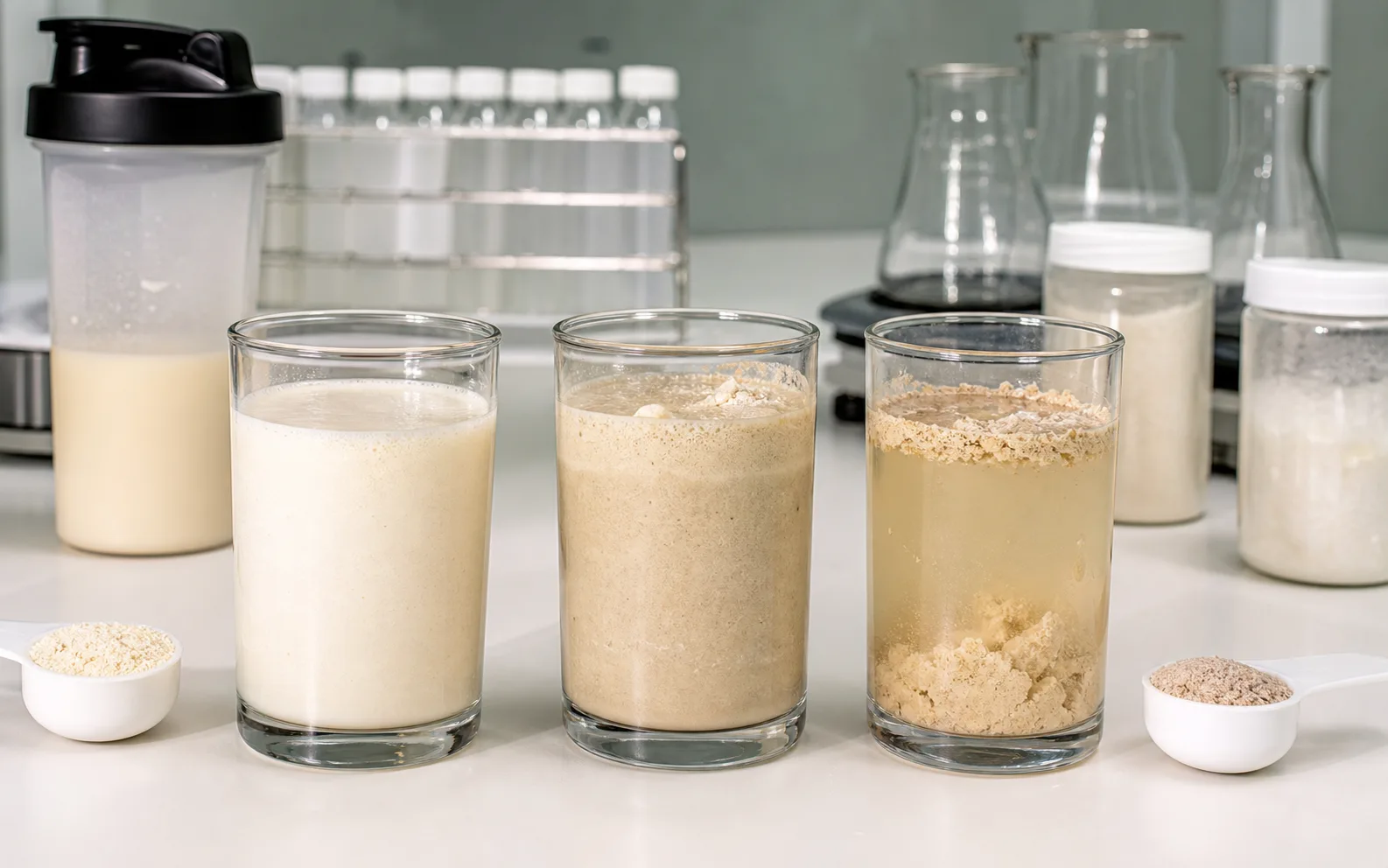
Protein and fiber both compete for water, but they do it differently. Many protein systems need enough hydration time to reduce chalkiness and avoid floating particles. Some fibers hydrate quickly and increase viscosity. Others disperse more slowly, create sediment, or alter the perception of sweetness and flavor release.
When these ingredients are combined, the user experience can change within seconds:
- the drink may feel thin at first and then thicken while sitting
- fiber may create a slippery or gummy mouthfeel
- protein may create foam, sediment, or chalky finish
- the formula may need stronger flavor masking than the ingredient deck suggests
- the serving may require more liquid than consumers are willing to use
This is why a formula should be tested in the real use case: shaker bottle, cold water, oat milk, smoothie, sachet, scoop, or RTM-style drink mix. A beaker test is useful. It is not the whole product.
In Albert Max's R&D workflow, dispersion testing is where a protein + fiber concept starts to become manufacturable. By adjusting fiber hydration behavior, protein source, sweetener system, and mixing sequence, our team can move a sample away from the clumped, gritty state brands often see in early trials and toward a smoother finished drink experience.
Fiber choice changes the entire product
"Add fiber" is not a formulation instruction. It is the beginning of a decision tree. Soluble corn fiber, inulin, resistant dextrin, partially hydrolyzed guar gum, psyllium, oat beta-glucan, acacia fiber, and resistant starches all behave differently. They also tell different consumer stories.
The FDA's dietary fiber framework matters because not every ingredient marketed like a fiber necessarily supports the same labeling or claim strategy. Brands should align ingredient selection, Supplement Facts labeling, and structure/function language before the formula is too far along.
| Fiber decision | Why it matters |
|---|---|
| Solubility | Directly shapes the consumer's shaker-bottle experience. Poor solubility leaves sediment, floating particles, or hard-to-swallow residue that can damage repeat purchase. |
| Viscosity | Controls whether the product feels creamy and premium or heavy, gummy, and inconvenient. A viscosity mistake can turn a daily-use product into a one-time trial. |
| Digestive tolerance | Fiber level has to support the brand promise without creating a poor first-week experience. Serving size, fiber type, and directions can affect reviews and reorders. |
| Flavor impact | Some fibers mute sweetness, amplify protein notes, or add their own aftertaste. If the flavor system is not rebuilt around the final fiber blend, the product can taste unfinished. |
| Labeling strategy | Fiber claims, Supplement Facts logic, and front-label language need to align early. Changing fiber late can create costly label, claim, or positioning revisions. |
Protein creates its own sensory load
Protein is not neutral either. Whey, casein, collagen peptides, pea protein, rice protein, and blended plant proteins each bring different texture, flavor, solubility, allergen, and positioning implications. Plant proteins may create earthier notes and more sediment. Whey can perform well but may not fit plant-forward positioning. Collagen peptides can support active aging and beauty-from-within concepts, but they do not replace complete protein positioning.
Once fiber enters the formula, the protein base may need to change. The best protein for a clean vanilla powder may not be the best protein for a fiber-heavy gut health blend. This is where early bench work saves money. Fixing taste and texture after packaging decisions are locked is a miserable little tax on optimism.
Albert Max supports this stage with a practical Flavor Masking Tech library built for plant proteins, high-viscosity fibers, minerals, sweetener systems, and other ingredients that can make powders taste bitter, beany, chalky, or overly thick. Instead of treating flavor as a final cosmetic step, we use Custom Blending experience to balance protein source, fiber system, mouthfeel, sweetness release, and serving size together.
Manufacturing issues show up before the consumer ever opens the pouch
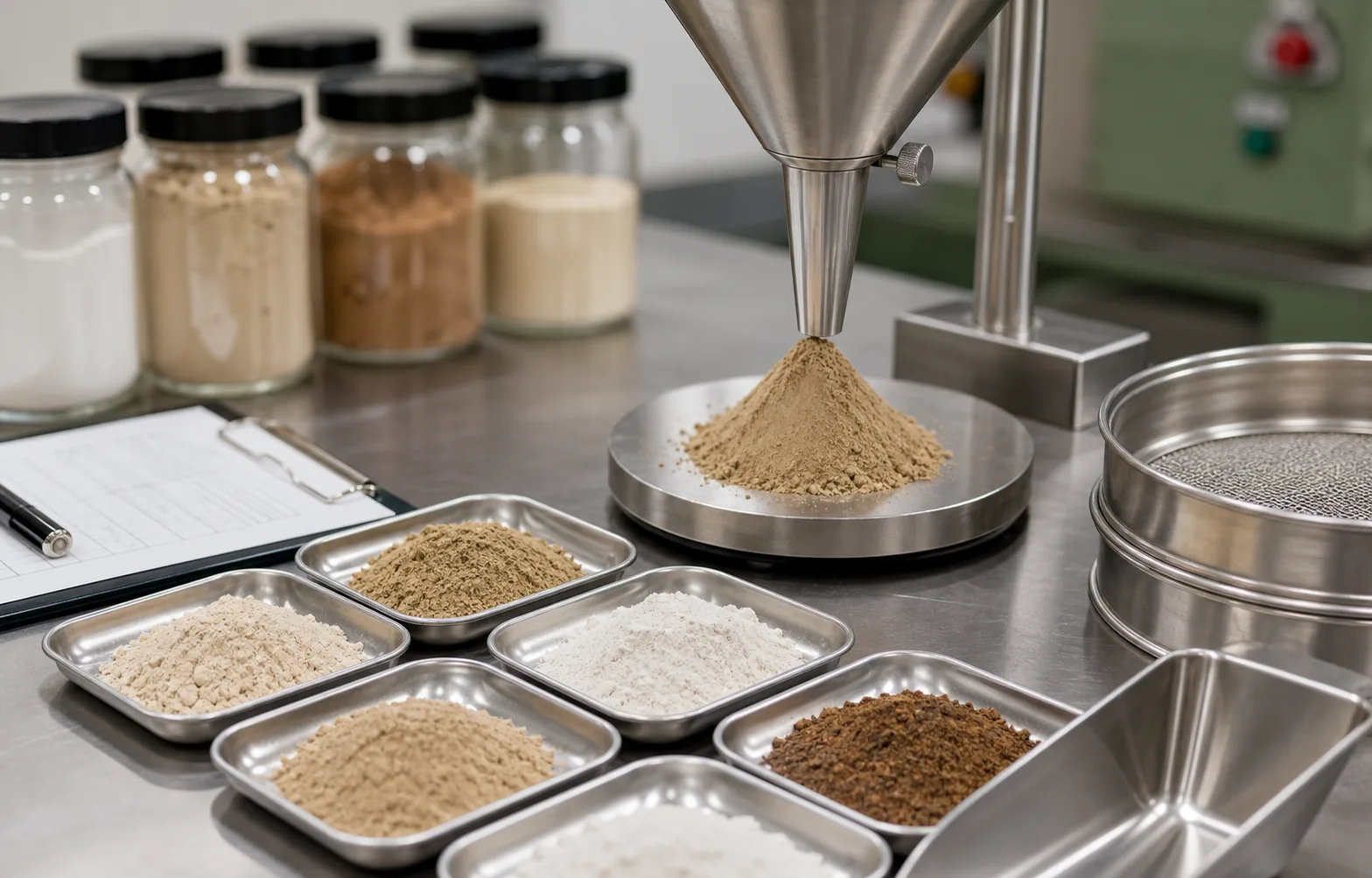
High-protein, high-fiber powders can be challenging before sensory testing even starts. Different ingredients may vary in bulk density, particle size, electrostatic behavior, and flow. That affects blending, filling, and batch-to-batch consistency.
That is where a good contract manufacturer earns its keep. Albert Max evaluates powder behavior before the first commercial batch, using Particle Size Control and Bulk Density Testing to reduce the risk of line stoppage, segregation, inaccurate fill weights, and packaging problems. A powder can taste great in a cup and still fail on the filling line if density and flow are ignored.
For brands, the key manufacturing questions include:
- Does the blend flow well enough for the chosen packaging format?
- Will density differences create segregation risk during handling?
- Can the target serving size fit in a practical sachet or scoop?
- Does the product need anti-caking support or humidity controls?
- Will the formula hold up through production, transport, and consumer storage?
FDA current good manufacturing practice requirements under 21 CFR Part 111 also make consistency more than a quality preference. Finished products need specifications, controls, and documentation that support identity, purity, strength, composition, and limits on contaminants. In other words: a great trend still has to become a controlled product.
Bench texture
Hydration, viscosity, clumping, foam, sediment, and shaker-bottle mouthfeel.
Flavor Masking Tech
Plant protein off-note masking, sweetness release, aftertaste control, and daily-use fatigue.
Custom Blending
Protein source, fiber system, sweetener, texture, flow, and serving size balanced together.
Scale-up control
Particle Size Control, Bulk Density Testing, segregation risk, fill weight, and cGMP documentation.
Flavor masking is not optional
Protein + fiber products often need more than a standard chocolate or vanilla flavor. Fiber can blunt sweetness or make the product feel heavier. Protein can add bitter, beany, dairy, sulfur, or collagen-like notes depending on source. Minerals, sweeteners, botanicals, or digestive support ingredients can add more complexity.
Good flavor work starts with the finished formula, not a fantasy base. A flavor that works in plain whey may fail in pea protein plus soluble fiber. A sweetener system that feels balanced on day one may become cloying by serving five. Since protein + fiber products are designed for repeated use, flavor fatigue matters.
For brand owners, this is the difference between buying a flavor and building a product. Albert Max's formulation team can test masking systems against the actual protein, fiber, sweetener, and active matrix, then connect that sensory work to the processing realities that decide whether the product can be blended, filled, packed, and reordered with confidence.
What brand owners should decide before requesting a quote
- What is the primary consumer promise? Protein support, gut health, GLP-1-adjacent nutrition, active aging, or daily meal support?
- What serving experience is acceptable? Thick shake, light drink, smoothie mix, sachet, capsule companion, or spoonable format?
- How much protein and fiber are truly needed? The label target has to survive serving size, taste, cost, and manufacturing reality.
- Which claims are off-limits? Avoid disease treatment language and keep structure/function claims supportable.
- What does success taste like after seven servings? The first sip matters. Repeat use matters more.
For supplement brands
Building a protein + fiber powder without getting trapped in formulation hell?
Albert Max helps supplement brands turn difficult protein + fiber concepts into production-ready powders. Our team combines Flavor Masking Tech for plant proteins and high-viscosity fibers, Custom Blending experience across protein and fiber systems, Particle Size Control, and Bulk Density Testing to solve the problems that usually appear between a promising bench sample and a reliable commercial batch.
That means we do not stop at "this tastes better." We look at whether the powder disperses in a shaker bottle, whether the flavor survives repeat use, whether the blend flows without bridging or segregation, whether the line can fill accurately, and whether the formula fits cGMP manufacturing expectations under 21 CFR Part 111.
References
- FoodNavigator-USA. Fiber reformulation challenges and functional fiber selection.
- U.S. Food & Drug Administration. Questions and answers on dietary fiber.
- U.S. Food & Drug Administration. Label claims for conventional foods and dietary supplements.
- U.S. Food & Drug Administration. Current Good Manufacturing Practices (CGMPs) for Food and Dietary Supplements.
- Electronic Code of Federal Regulations. 21 CFR Part 111 - Current Good Manufacturing Practice in Manufacturing, Packaging, Labeling, or Holding Operations for Dietary Supplements.