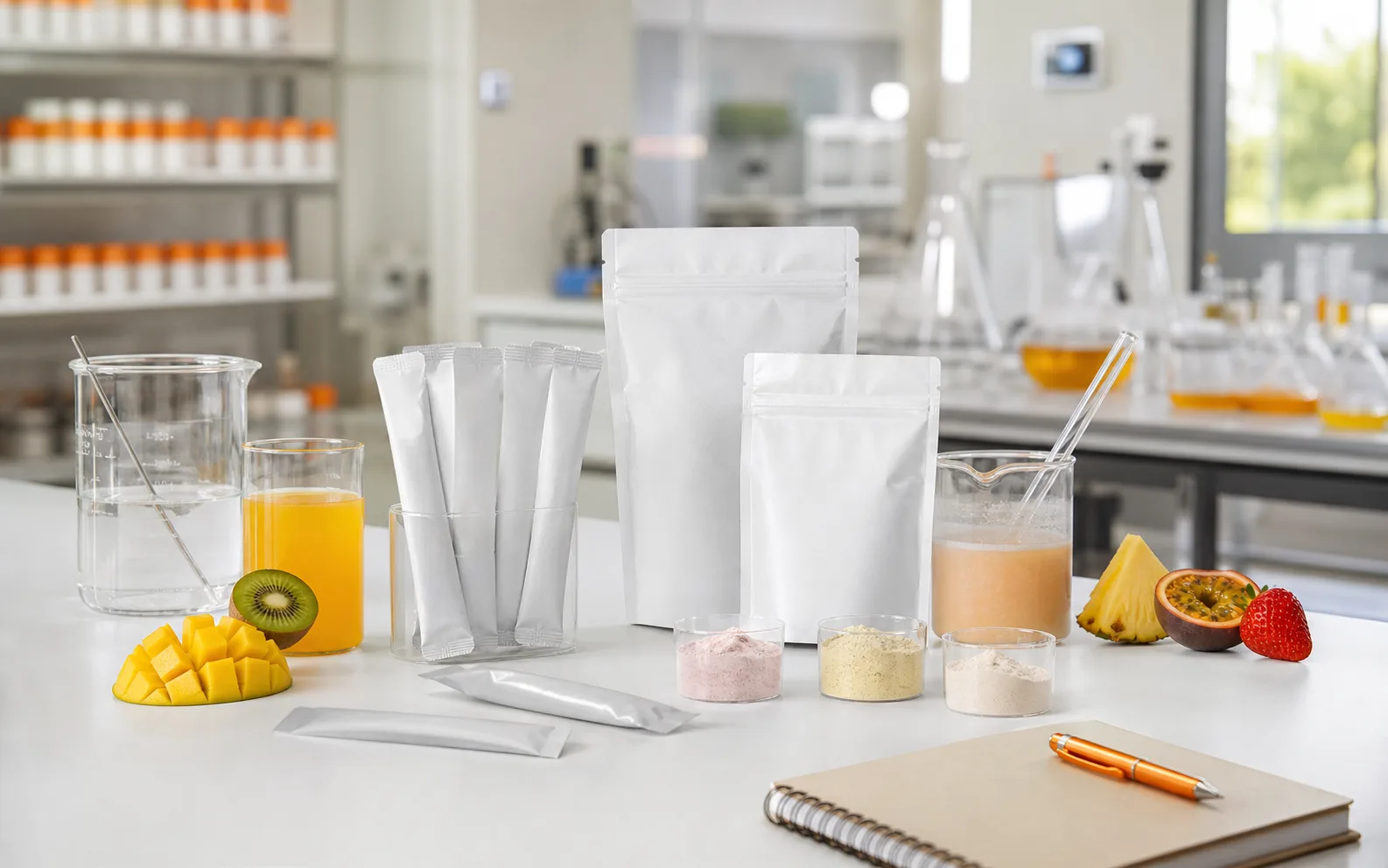
For supplement brands, flavor used to be the last step: choose berry, citrus, or vanilla after the active formula was already locked. That model is starting to look dated. In 2026, flavor is moving upstream because the fastest-growing formats - powders, stick packs, hydration mixes, greens, clear protein, and functional drink systems - expose every sensory flaw.
The consumer does not experience a formulation spreadsheet. They experience aroma, color, sweetness, acidity, mouthfeel, aftertaste, and whether they want to take the product again tomorrow. That makes flavor a commercial issue, not just a sensory issue.
Why taste is becoming a product strategy
Recent 2026 trend coverage from Kerry, ADM, NielsenIQ, IFT, and supplement contract manufacturers points in the same direction: consumers want functional benefits, but they also expect enjoyable, modern flavor experiences. Citrus, berry, tropical, hibiscus, dragon fruit, matcha, sour, and globally inspired flavor systems are not just decorative choices. They help consumers understand what the product is for and how it fits into a daily routine.
That matters because supplement categories are getting more format-driven. A capsule can hide poor taste. A powder cannot. A stick pack has even less room to hide because the serving size, flow, humidity behavior, and flavor load have to fit into a small packet that opens cleanly and mixes quickly.
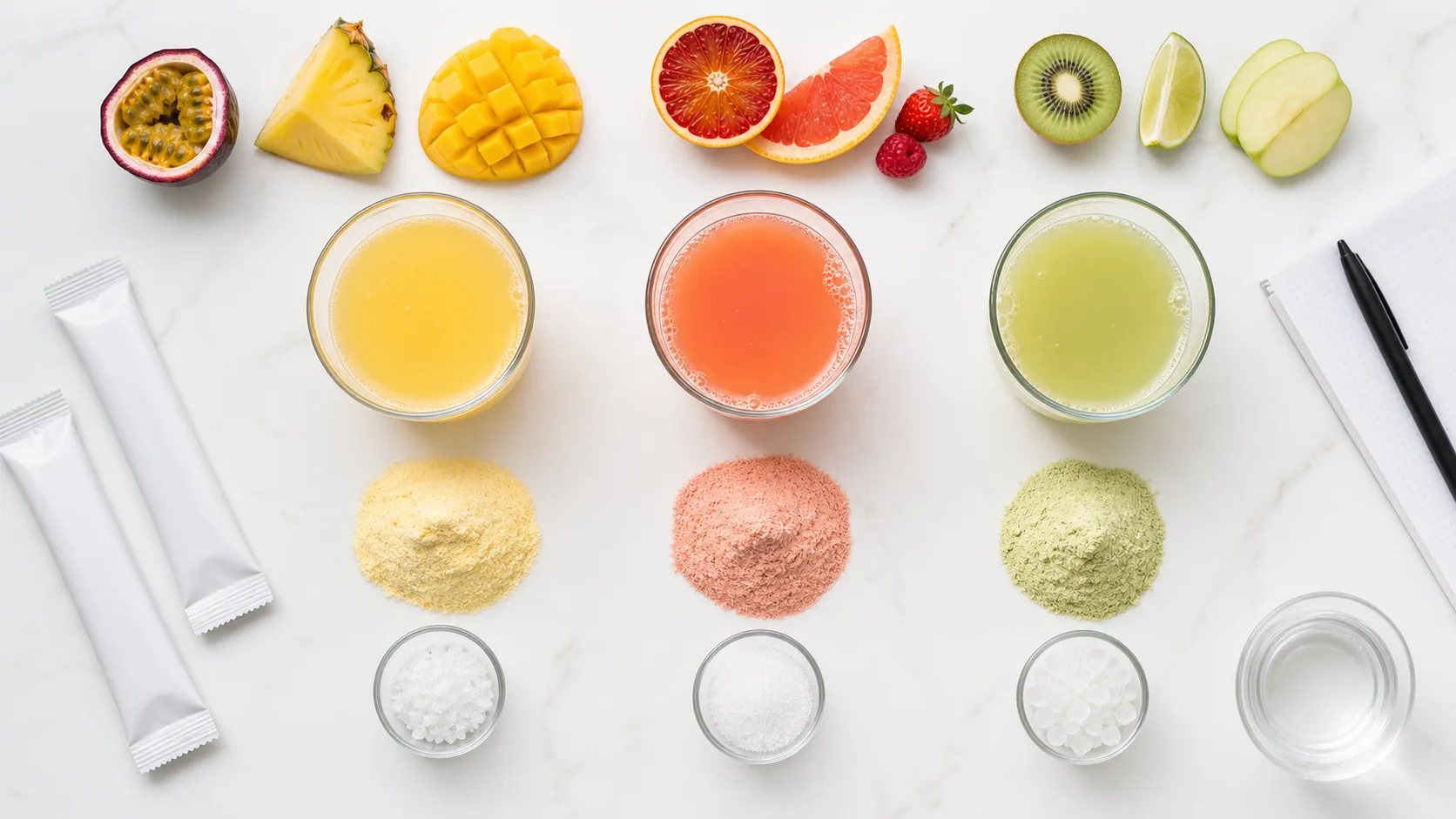
The strongest opportunities are not just new flavors
The easy reading of flavor trends is to chase whatever sounds newest. That is shallow. A better product development question is: which flavor architecture helps the formula work?
| Flavor direction | Where it can work | Manufacturing watchout |
|---|---|---|
| Citrus and tropical | Hydration, clear protein, energy, greens | Acid balance can sharpen bitterness or stress minerals |
| Berry and fruit punch | Daily powders, kids' nutrition, active lifestyle mixes | Sweetness can become heavy in high-dose formulas |
| Hibiscus, tea, matcha | Wellness, beauty, gut health, calm energy concepts | Color, astringency, and botanical notes need control |
| Sour or swicy profiles | Younger functional beverage and stick-pack concepts | Claim, heat, acid, and repeat-use tolerance must be checked |
Format decides what flavor can carry
A tub powder can often tolerate a more complex flavor system because there is room for acids, sweeteners, masking agents, mouthfeel builders, and anti-caking support. A stick pack is stricter. Every gram matters. The product still has to fill consistently, seal cleanly, resist clumping, and dissolve without creating a gritty or chalky first sip.
That is why flavor-led innovation should not be separated from manufacturing. A flavor may win a bench tasting and still fail during scale-up if the powder pulls moisture, cakes in the hopper, shifts density, or creates too much dust during filling.
Best fit
Hydration and drink mixes
Flavor is central to the consumer promise and helps make minerals or functional actives feel refreshing.
High potential
Clear protein and daily nutrition
Light, fruit-forward systems can move products away from heavy shake expectations.
Higher risk
Overloaded functional stacks
Too many actives can create bitterness, color drift, sediment, and a confused claim story.
Clean label does not make flavor easier
Many brands want less sugar, natural flavors, recognizable sweeteners, botanical color, and stronger functional positioning. Good. But those preferences reduce the number of easy fixes available to formulators. A bitter active cannot always be buried under sweetness. A mineral system cannot always be brightened with acid without creating harshness. A botanical powder may bring color and earthy notes that clash with delicate flavors.
The winning formulas will treat flavor as a system: active ingredient selection, sweetener blend, acid profile, aroma, powder behavior, color expectation, mouthfeel, and use occasion. The product has to taste good, but it also has to run through production.
Claim discipline still matters
Flavor-led products can drift into sloppy marketing when the concept is exciting. A dragon fruit energy mix, hibiscus beauty powder, or citrus hydration stick still needs compliant dietary supplement language. Brands should avoid implying that a supplement treats disease, replaces medication, or produces drug-like outcomes. Structure/function positioning, substantiation, and label review should happen before packaging design gets too far ahead of the formula.
Manufacturing takeaway
Flavor is now part of format strategy.
Albert Max helps supplement brands connect flavor direction, active ingredient load, powder behavior, packaging format, and compliant positioning before a concept turns into an expensive production problem.
References
- Kerry. How Taste Is Becoming a Competitive Edge in Supplements.
- Kerry. Taste Charts 2026.
- ADM. 2026 Flavor and Color Trends.
- NielsenIQ. Expo West 2026 trends.
- Institute of Food Technologists. Outlook 2026: Flavor Trends.
- U.S. Food & Drug Administration. Structure/function claims.